
Even BTS’s RM Couldn’t Get the One He Wanted
How a 1,500-year-old Korean masterpiece became a sold-out design object—and helped turn Seoul’s National Museum of Korea into one of the world’s most visited museums.
WORDS BY BRANDDIP · SEOUL
There is a museum souvenir that even BTS leader RM once walked away without.
Not because it was too expensive. Not because it was a limited celebrity collaboration. The National Museum of Korea simply didn’t have the color he wanted.
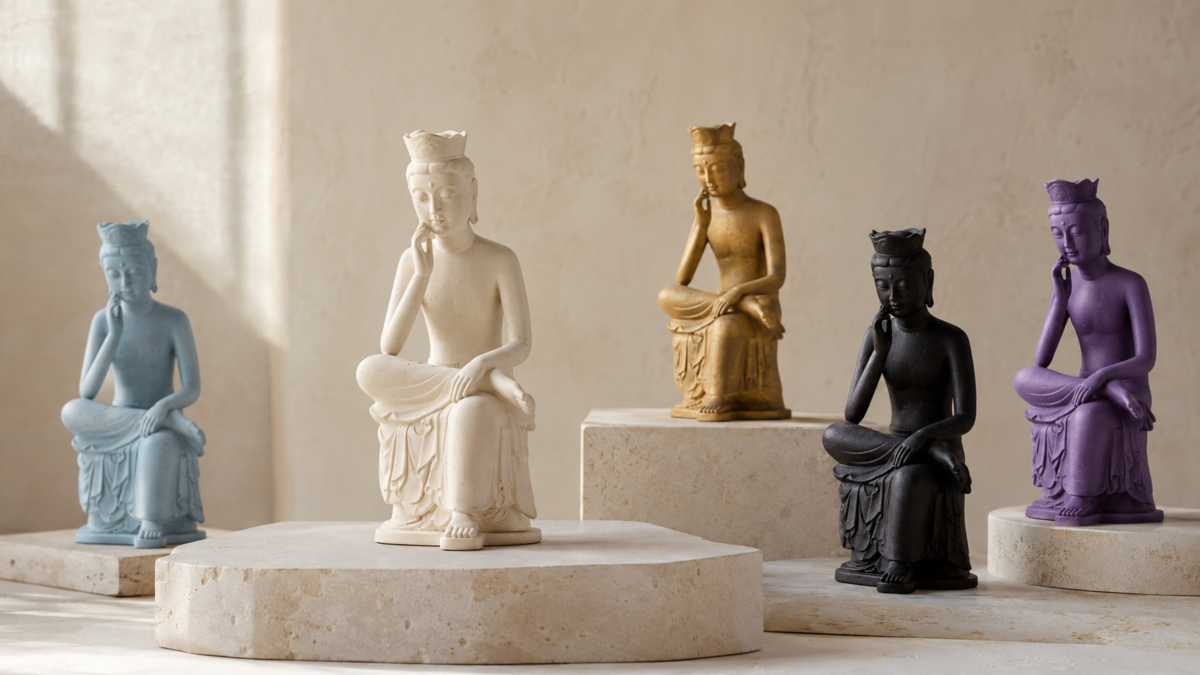
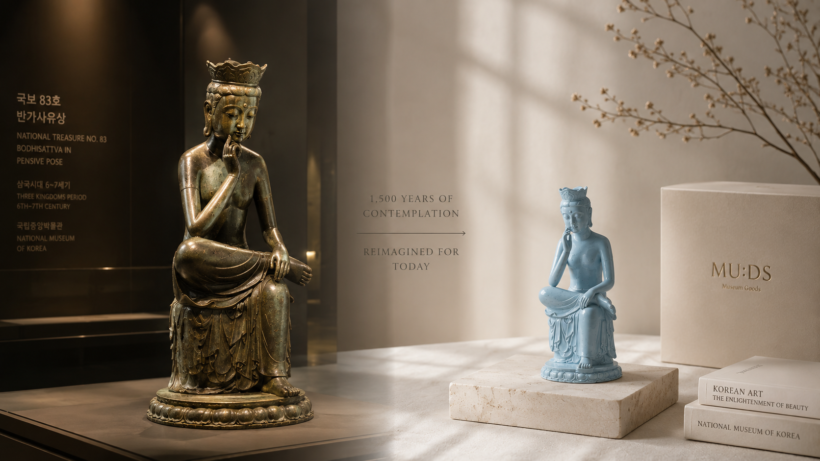
The object in question was a miniature of Korea’s celebrated Pensive Bodhisattva—a small, contemporary reinterpretation of one of the museum’s most recognizable national treasures.
When the miniature first launched online during the pandemic, it sold out almost immediately. Production increased, and the museum eventually began selling it offline. But when RM visited the museum shop, his preferred color was already gone.
He left empty-handed.
Later, when the miniature returned to stock, RM finally bought one and shared it on social media. The response was immediate. International ARMY began visiting the museum, and some bought the miniature in several available colors.
But this isn’t simply another story about something selling out because a celebrity posted it.
The miniature was already difficult to find before RM entered the picture. If anything, his interest revealed something that was already happening: a museum object had become desirable enough that even one of the world’s biggest artists wanted one for himself.
This wasn’t a museum souvenir made famous by RM.
It was already the kind of object RM wanted to own.
Not Just Another Celebrity Sellout
The Pensive Bodhisattva miniature does more than shrink a historic sculpture down to shelf size.
It preserves the gentle curves, tilted head and quiet posture of the original, then removes them from the visual language we usually associate with historical artifacts. Instead of aged bronze, the figure appears in colors such as ivory, gold, black, sky blue and purple.
The result feels surprisingly contemporary.
It can sit beside art books, speakers or a favorite lamp without looking like something brought home from a school field trip. It still carries the dignity of the original, but it also works as an object chosen simply because it looks good.
Recent versions even include photo cards explaining the sculpture in Korean, English, Japanese and Chinese. The cultural context remains, but it no longer arrives as a lecture.
That balance is what makes the object work.
MU:DS—the cultural product brand of Korea’s national museums—hasn’t made the artifact less meaningful. It has simply created an easier and more personal way to begin a relationship with it.
From national treasure to desktop object: MU:DS translates heritage into something personal.
A Museum People Actually Want to Spend Time In
The popularity of a single miniature might seem like a small story. But it reflects a much larger transformation taking place at the National Museum of Korea.
In 2025, the museum welcomed 6,507,483 visitors, placing it behind only the Louvre and the Vatican Museums among the world’s most visited museums. That was a dramatic rise from roughly 3.8 million visitors the year before.
6,507,483
VISITORS IN 2025
#3
AMONG THE WORLD’S MOST VISITED MUSEUMS
It would be easy to explain that growth with the global popularity of Korean culture. But K-culture alone doesn’t tell the whole story.
The museum has been changing the way people encounter history.
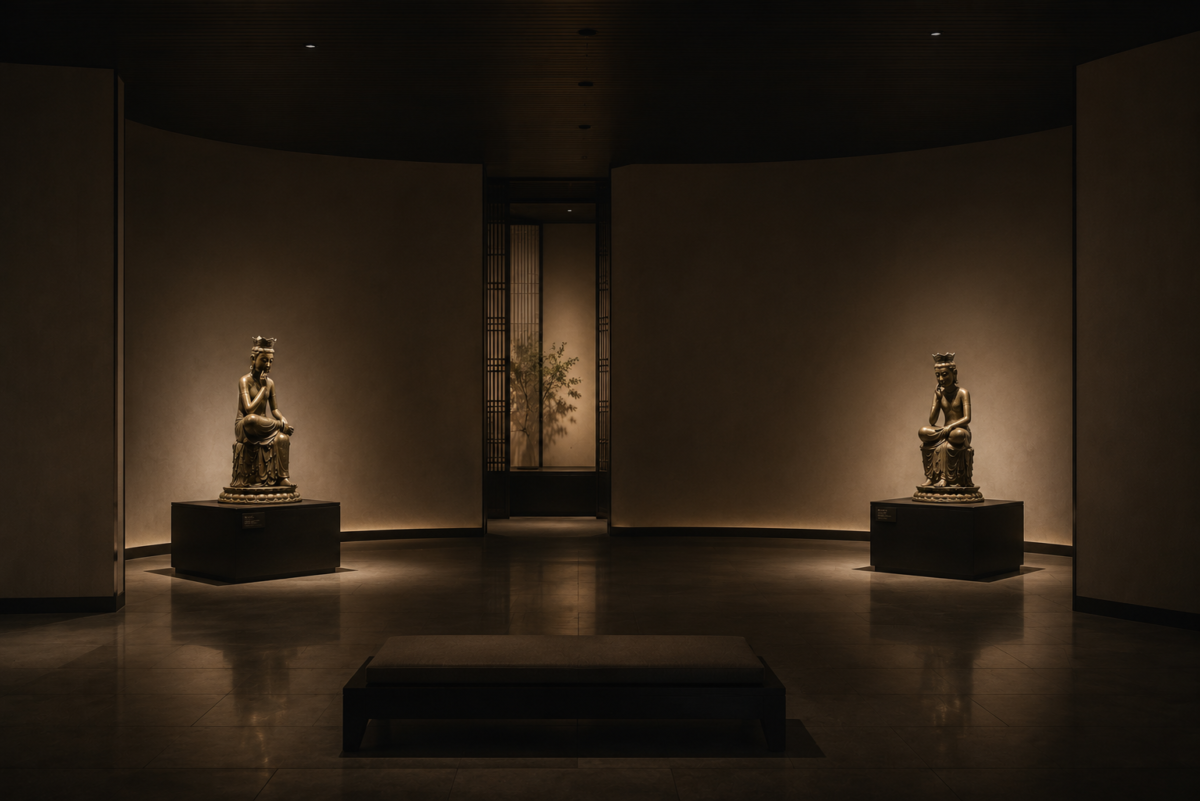
One of its clearest examples is the Room of Quiet Contemplation, a gallery created for two Pensive Bodhisattva sculptures produced in the late sixth and early seventh centuries.
To reach them, visitors move through a dark, quiet corridor before entering an expansive room. There are no crowded rows of objects competing for attention. Instead, the two figures are given distance, silence and time.
The museum isn’t only deciding what visitors should see. It is designing how slowly they should see it.
That distinction matters.
Most museums ask us to keep moving—another object, another label, another gallery. The Room of Quiet Contemplation asks us to stop. Its architecture turns looking into an experience of its own.
It doesn’t simply display two statues.
It changes the speed at which you look.
The MU:DS Effect
The experience doesn’t end when visitors leave the gallery.
At the museum shop, the same cultural heritage reappears through MU:DS—pronounced like “muse,” and short for museum goods.
Pensive Bodhisattvas, Goryeo celadon, white porcelain moon jars and tigers from Korean folk paintings return as miniatures, stationery, fashion accessories and everyday objects.
Some are elegant. Some are playful. Some are the kind of things you could easily imagine seeing in a design shop without realizing they originated in a museum collection.
That is precisely the point.
These artifacts are no longer presented only as things to study, remember or admire from a respectful distance. They become things people can choose according to their own taste—and bring into their homes.
The scholarship remains serious. The entrance into that scholarship doesn’t have to feel heavy.
In 2025, MU:DS generated approximately ₩41.3 billion in annual sales, its highest figure to date. More than half of those sales came from physical museum shops.
That detail is particularly telling.
People first encounter the original object, understand something about its history and atmosphere, and then take a version of that feeling home. Exhibition, space and product become parts of the same experience.
The gift shop is no longer an afterthought placed beside the exit.
It is the final chapter of the exhibition.
Why it works
MU:DS keeps the cultural research intact while making the first encounter lighter, more visual and far easier to enter.
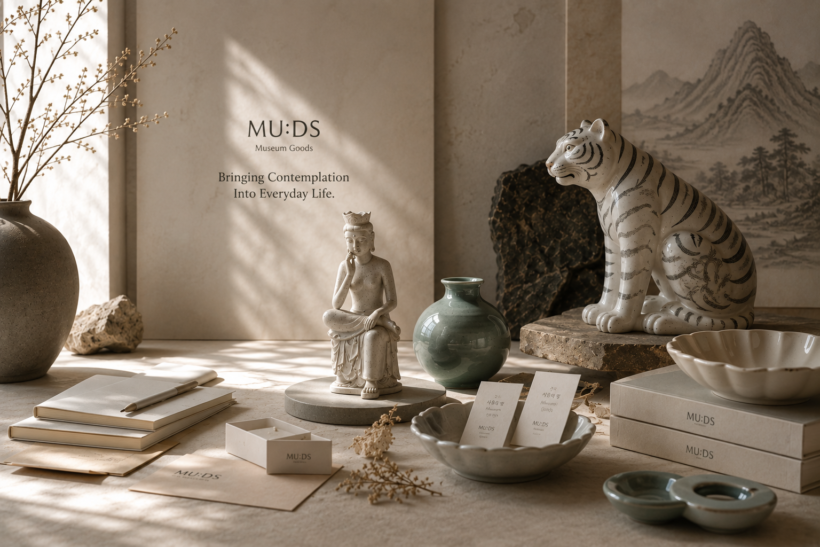
MU:DS translates Korean cultural heritage into objects designed for contemporary life.
When a Museum Becomes a Brand
The National Museum of Korea’s success doesn’t come from making tradition merely younger, cuter or more Instagram-friendly.
Its strength lies in understanding that depth and accessibility aren’t opposites.
Inside the Room of Quiet Contemplation, visitors meet the original sculptures in an atmosphere designed around silence and attention. At MU:DS, they encounter those same forms through color, humor and personal taste.
One creates reverence. The other creates attachment.
Together, they form a natural passage between ancient cultural heritage and contemporary life.
RM’s connection to the miniature makes sense in this context. His interest in art, craft and Korean visual culture has long been part of his public identity. Fans weren’t simply following a purchase. They were following his way of looking—and discovering an aspect of Korean culture through it.
The small sculpture he once couldn’t find in his preferred color has now become a symbol of something much bigger: a museum learning how to live outside its own walls.
Maybe one of Korea’s most exciting brands right now isn’t a fashion label or a technology startup.
Maybe it’s a museum in Yongsan.
WORDS · BRANDDIP
CATEGORY · TASTE OF BRAND
SEOUL, SOUTH KOREA