
Vaarnii: When Did Pine Become Cool Again?
Pine used to be the wood of starter furniture, summer cabins and things you planned to replace later. Vaarnii is asking what happens when we stop treating it like a compromise.
WORDS BY BRANDDIP · FINLAND
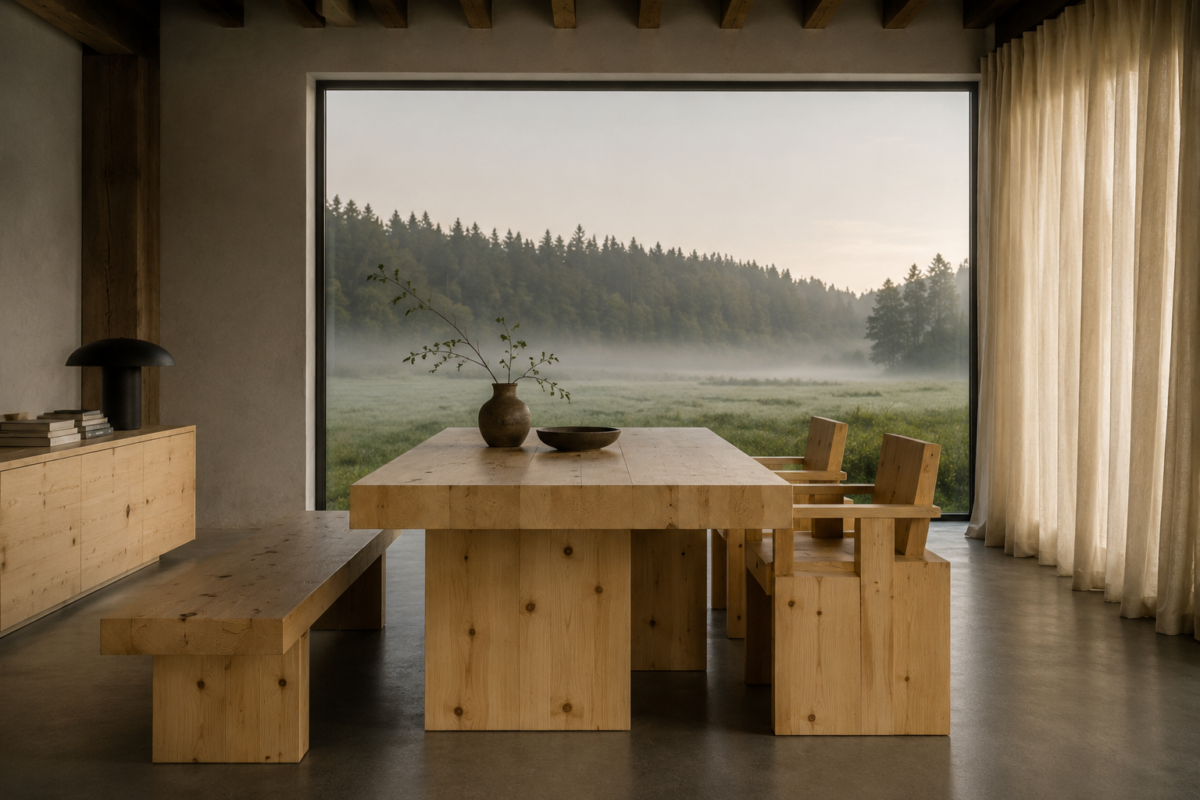
There was a time when pine wasn’t supposed to be aspirational.
It was practical.
Available.
Affordable.
The wood of school furniture, first apartments, cabins and shelves you assembled yourself.
Oak could become serious.
Walnut could become luxurious.
Marble could become collectible.
Pine was just pine.
Then Vaarnii built an entire furniture company around it.
Not by disguising it.
Not by staining it until it resembled something more expensive.
Not by sanding away every knot until the material became anonymous.
Vaarnii makes pine look more like pine.
The grain is obvious.
The sections of timber are thick.
The construction often feels almost exaggerated.
Some pieces look less like furniture that has been styled and more like furniture that has simply decided to exist.
What if the material we overlooked was interesting precisely because nobody was trying very hard to impress us with it?
Pine Had a Reputation Problem
Materials carry social meaning.
We rarely encounter wood as simply wood.
We encounter associations.
Dark walnut can feel expensive.
Cherry can feel traditional.
Oak has spent years moving comfortably between Scandinavian minimalism, luxury interiors and high-end hospitality.
Pine has a more complicated history.
It is abundant.
It is soft.
It dents.
It has visible knots.
And because it has been used so widely for inexpensive furniture, familiarity became part of its problem.
We knew it too well.
Vaarnii saw something different.
The Finnish company works around one primary raw material: Finnish Scots pine, one of the country’s most common trees.
That decision turns abundance into a design position.
Instead of asking which material looks most prestigious, the brand begins somewhere more local:
What do we already have?
That question sounds simple.
But in a design industry constantly searching for the next material, finish or innovation, choosing something common can feel surprisingly radical.
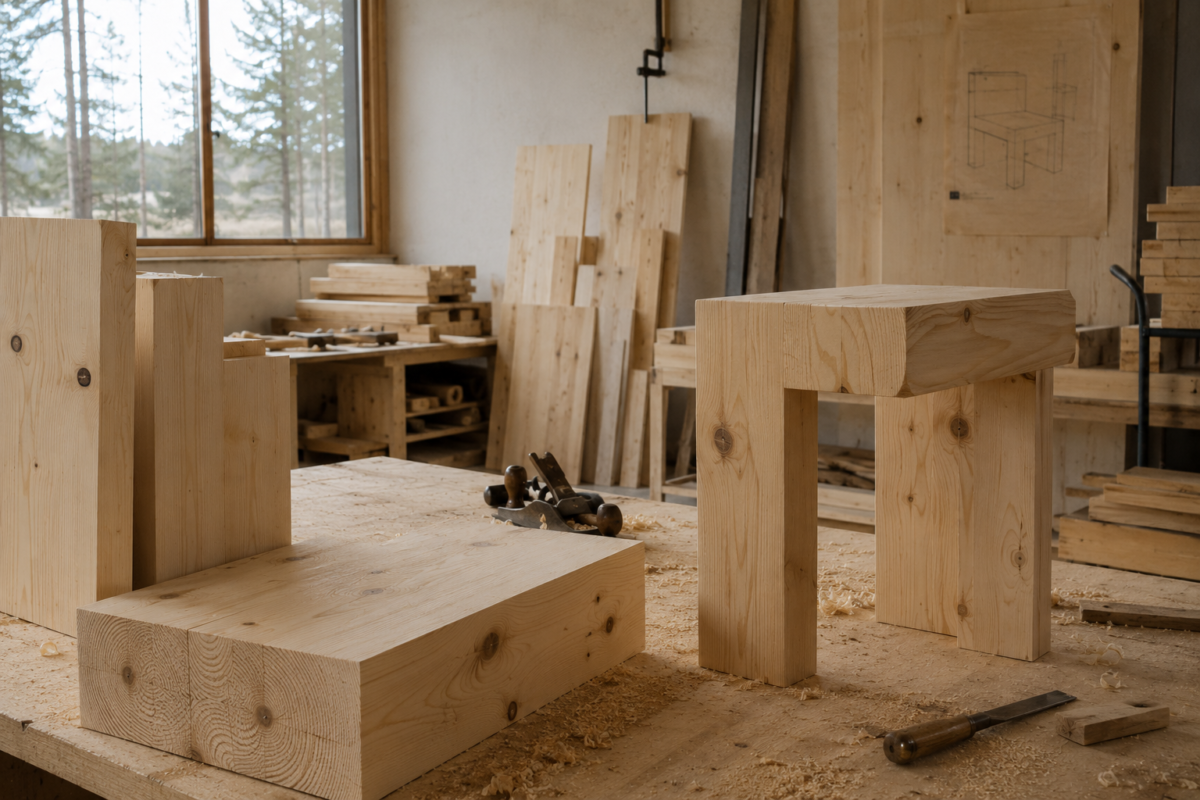
Instead of Hiding the Material, Make More of It
Most premium furniture has been trained to behave.
Edges become thinner.
Connections disappear.
Surfaces become seamless.
The object tries to look effortless.
Vaarnii often moves in the opposite direction.
Its furniture can be blunt.
Chunky.
Structural.
A stool looks like timber.
A chair looks built.
A bench can feel almost architectural.
The material isn’t being asked to disappear behind design.
The material is the design.
That is especially clear in pieces like Fredrik Paulsen’s 001 series, where generous sections of pine create forms that are simple but unusually substantial.
The effect is almost funny at first.
A small stool can look disproportionately serious.
A dining chair can feel heavier visually than the room around it.
But that exaggeration changes how we read pine.
Suddenly the material stops looking temporary.
It looks permanent.
Luxury doesn’t always come from making a material look more refined.
Sometimes it comes from taking the material more seriously.
The Furniture Is Allowed to Get Older
This may be the most interesting part.
Vaarnii doesn’t promise that pine will remain perfect.
It more or less promises the opposite.
Pine is soft.
It will dent.
It will scratch.
Its pale surface will react with light and gradually move toward a warmer honey colour.
In other words, the furniture you buy is not necessarily the furniture you will own ten years later.
That change isn’t treated as a manufacturing failure.
It is treated as evidence.
Evidence that someone sat there.
Moved it.
Hit it with a vacuum cleaner.
Put a glass down too hard.
Lived with it.
This feels strangely refreshing at a moment when so many products are photographed as if human contact would ruin them.
Vaarnii’s furniture doesn’t ask to remain untouched.
It expects a life.
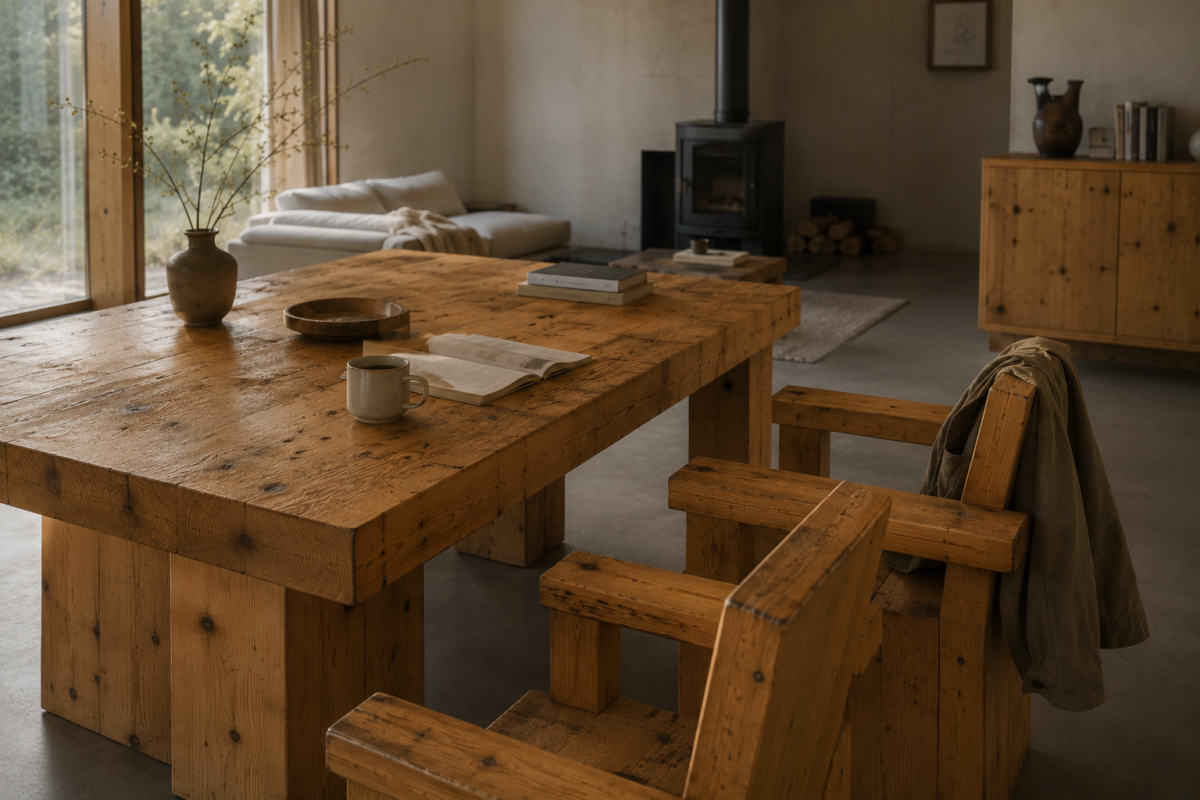
Why Does Everything Have to Look Precious?
There is another reason Vaarnii feels relevant now.
For years, much of contemporary interior culture has been obsessed with preciousness.
The perfect travertine table.
The perfect boucle chair.
The perfect sculptural lamp.
The room becomes a collection of surfaces you feel slightly nervous about touching.
Vaarnii’s furniture can still be expensive.
It can still be collectible.
But visually, it resists some of that delicacy.
The forms are often too solid to feel fragile.
The knots are too visible to feel flawless.
The material is too familiar to pretend it came from another universe.
That creates an unusual tension:
the furniture can feel premium without behaving precious.
And maybe that is becoming its own kind of luxury.
Not a surface that needs protection.
An object that becomes better because you used it.
Local Doesn’t Have to Look Traditional
There is an easy way to talk about local materials.
Heritage.
Craft.
Tradition.
Those things matter, but they can also trap local design inside nostalgia.
Vaarnii does something smarter.
Its furniture is made in Finland using Finnish pine and Finnish makers, but the resulting objects don’t have to look like historical Finnish furniture.
The brand works with designers from different countries and different design cultures.
The material stays local.
The ideas can travel.
That distinction matters.
Local material doesn’t require local nostalgia.
A resource can belong deeply to one place while still becoming the beginning of something contemporary.
This may be one reason Vaarnii feels broader than a story about Scandinavian furniture.
It is really a story about what happens when brands stop assuming that globally desirable objects require globally fashionable materials.
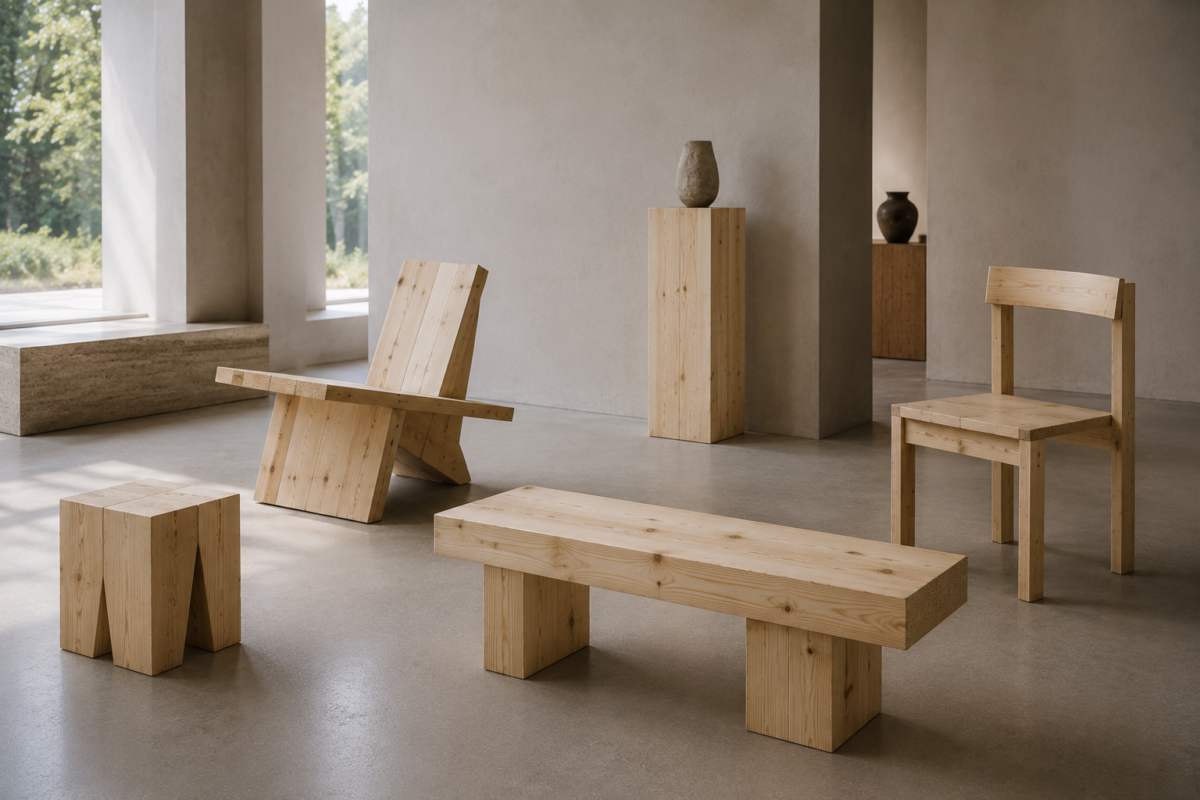
One Material Can Be a Whole Brand
Most brands expand by adding.
More colours.
More materials.
More categories.
More options.
Vaarnii built recognition by reducing the number of decisions.
Pine first.
Then ask what can happen inside that limitation.
A chair.
A table.
A bench.
A lamp.
A tray.
A chopping board.
The catalogue can grow while the material story stays remarkably clear.
That consistency is powerful branding.
You don’t need to see a giant logo.
The thickness of the timber can do some of the work.
The knots can do some of the work.
The pale yellow wood can do some of the work.
The object itself becomes recognizable because the rules behind it are recognizable.
Why Pine, Why Now?
Maybe because perfection has become predictable.
Maybe because homes filled entirely with polished statement objects eventually begin to feel like showrooms.
Maybe because sustainability becomes more interesting when it changes what something looks like, rather than simply adding a paragraph to the product page.
Or maybe because taste has a habit of returning to the things it once dismissed.
Pine was too common.
Too inexpensive.
Too soft.
Too ordinary.
Those haven’t necessarily stopped being true.
Vaarnii simply changed the conclusion.
Common can mean available.
Soft can mean capable of recording time.
Ordinary can mean culturally overlooked.
And overlooked materials leave room for someone to make us look again.
Maybe good design doesn’t always begin by finding something new.
Sometimes it begins by taking something familiar more seriously.
Maybe Pine Was Never the Cheap Version
Perhaps that is the cleverest thing about Vaarnii.
It doesn’t spend much energy trying to convince us that pine is secretly another material.
It remains knotty.
It remains pale.
It remains soft enough to show what happens to it.
The brand’s ambition isn’t to escape those qualities.
It is to build an identity from them.
And once that happens, the question changes.
Instead of:
Why would anyone make expensive furniture from pine?
We start asking:
Why did we decide pine wasn’t desirable in the first place?
BRANDDIP TAKE
Vaarnii didn’t make pine valuable by making it look expensive. It made pine interesting by refusing to apologize for what it already was.
DISCOVER VAARNII
Explore Vaarnii’s Finnish pine furniture, lighting and objects on the brand’s official website.
WORDS · BRANDDIP
CATEGORY · TASTE OF BRAND
FINLAND