
David Protein: When Did We Start Eating Numbers Instead of Food?
A shopper stands in front of a supermarket shelf holding two protein bars.
They are not choosing between chocolate and peanut butter.
They are comparing twenty grams with twenty-eight.
Two hundred calories with one hundred and fifty.
Five grams of sugar with zero.
The wrappers promise flavour.
The decision happens somewhere else.
WORDS BY BRANDDIP · NEW YORK / UNITED STATES
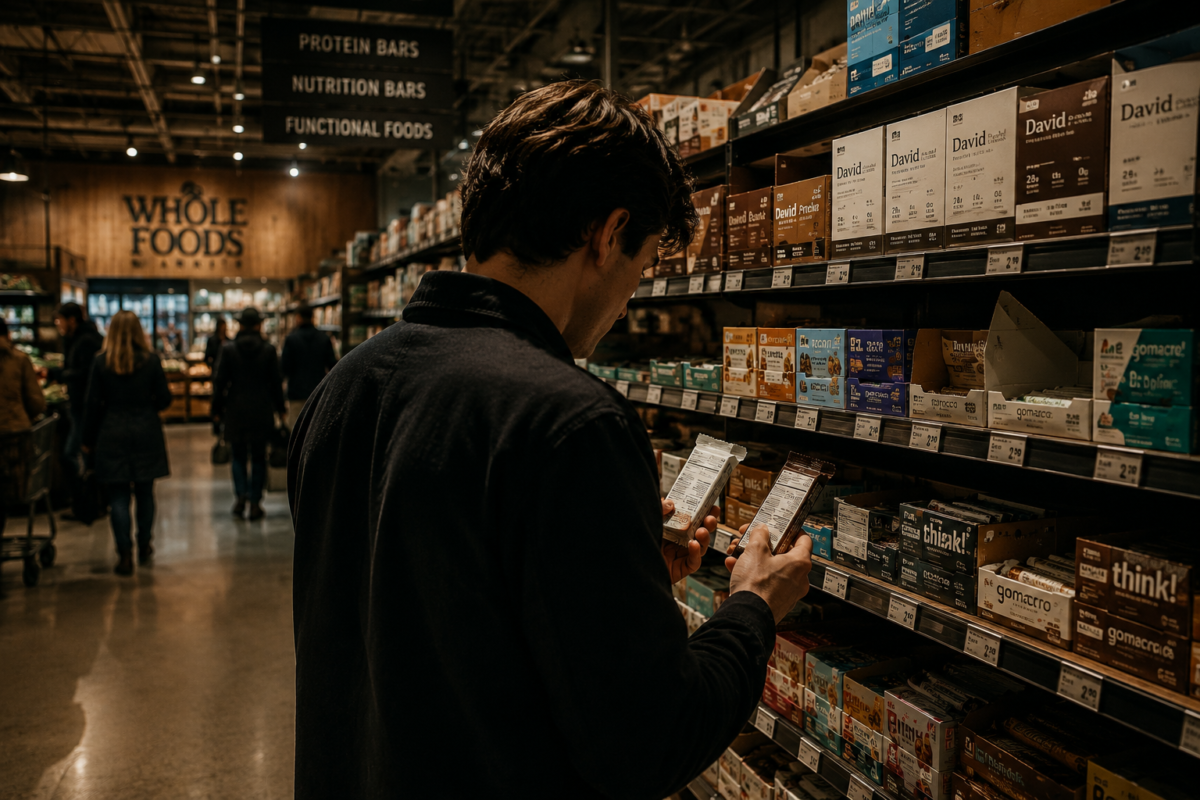 Before deciding what they want to eat, many consumers now decide which numbers they are willing to consume.
For most of food history, appetite came first.
You smelled something.
You saw it.
You remembered how it tasted the last time.
You wanted it.
Nutrition information existed, but it remained on the edge of the experience.
A small panel on the back.
A number consulted after desire had already begun.
Now the order is often reversed.
We look at the calories before the cookie.
The protein before the pasta.
The sugar before the pleasure.
Sometimes the number becomes the appetite.
David Protein was built for that moment.
The company launched its bars in 2024 with a proposition so clean it barely sounded like food marketing:
28 grams of protein.
150 calories.
Zero grams of sugar.
There were flavours, of course.
Chocolate chip cookie dough.
Peanut butter chocolate chunk.
Fudge brownie.
But the flavour names were not the most memorable part of the package.
The arithmetic was.
David did not ask consumers to fall in love with a snack.
It asked them to admire its efficiency.
The Back of the Package Became the Front
Watch someone shop for a high-protein snack today.
The movement is nearly automatic.
Pick it up.
Turn it over.
Scan the panel.
Return it or keep it.
The front of the wrapper may create interest.
The back grants permission.
This behaviour extends far beyond protein bars.
Consumers compare yogurt by protein.
Bread by fibre.
Cereal by sugar.
Frozen meals by calories.
Food is increasingly evaluated through a sequence of thresholds.
Enough protein?
Too much sugar?
Can it fit today’s macros?
Is it worth the calories?
The language sounds financial because the logic is similar.
Every bite spends from a limited daily budget.
The ideal product delivers the greatest possible return.
David made this calculation unusually visible by focusing on what it calls calories from protein.
Its Gold bars are designed so that a remarkably large proportion of their stated calories comes from protein.
That ratio is not hidden inside a paragraph about balanced living.
It is the product.
Even the name Gold sounds less like a flavour and more like a performance tier.
The consumer is not simply choosing a snack.
They are choosing the more optimised version.
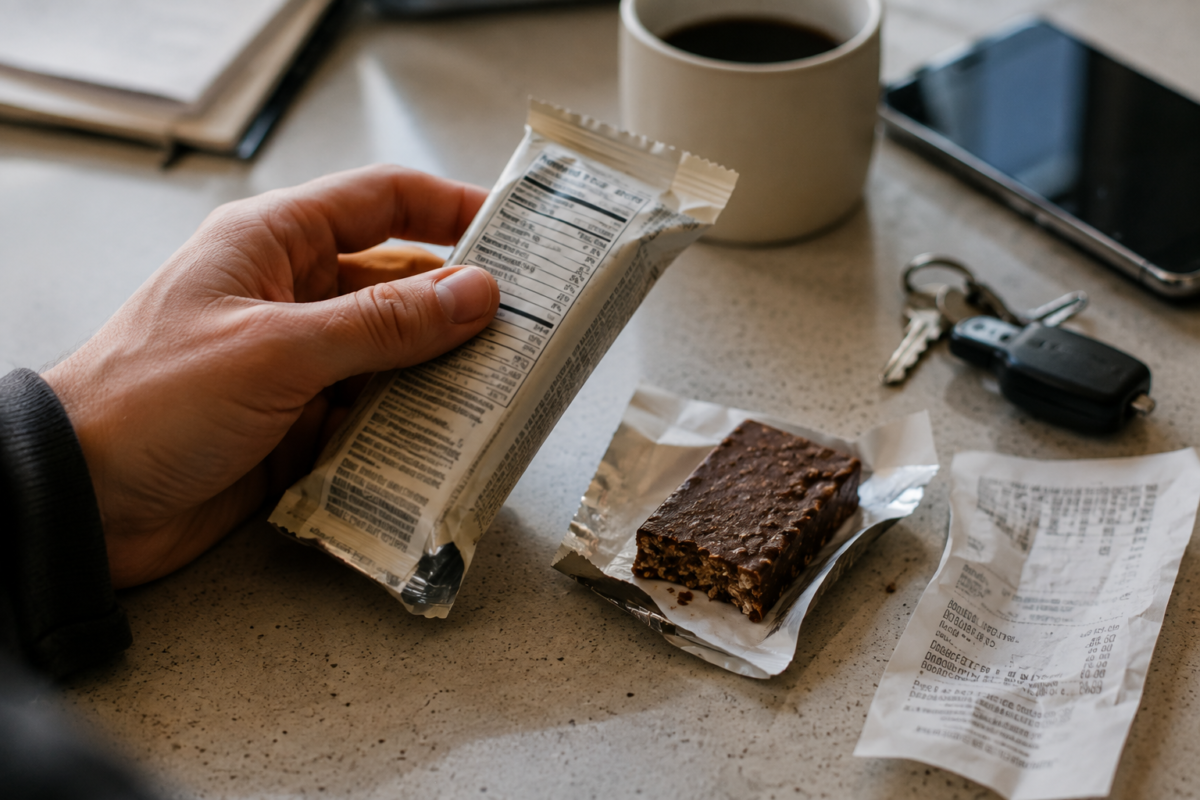 Nutrition panels were once supporting information. Now they often decide whether the food gets eaten at all.
Protein Became a Personality
Protein has always been essential.
What changed was the amount of personality we began attaching to it.
Protein now suggests discipline.
Preparation.
Strength.
Satiety.
Recovery.
A person who remembers their protein intake appears to be taking care of something larger than lunch.
Their body.
Their future.
The person they are trying to become.
This is why high-protein versions of familiar foods keep multiplying.
Protein cereal.
Protein pasta.
Protein coffee.
Protein pancakes.
Protein desserts.
The nutrient escaped the gym and entered the entire supermarket.
It did not travel alone.
It arrived with fitness trackers, calorie apps, recovery scores, glucose monitors, wellness podcasts and endless videos explaining the most efficient way to eat.
Consumers did not merely gain nutritional information.
They began living inside a permanent evaluation of their own behaviour.
Was breakfast optimal?
Did lunch contain enough?
Was the snack useful?
Could dinner have performed better?
David feels perfectly native to this culture because it does not ask us to stop calculating.
It rewards the calculation.
The Food Started Speaking Like Technology
David’s product language is revealing.
The bar is described through systems.
A protein system.
A binding system.
A fat system.
A flavour system.
The vocabulary feels less like a bakery and more like a product-engineering company.
This is not accidental.
Modern technology trained consumers to expect improvements that can be measured.
The new phone is faster.
The new battery lasts longer.
The new software completes the task with fewer steps.
David applies the same promise to food.
More protein.
Fewer calories.
Less sugar.
The bar is positioned as an upgrade.
And once food starts behaving like technology, pleasure alone can look strangely inefficient.
A pastry may taste better.
But what does it accomplish?
An ordinary chocolate bar may provide comfort.
But where is the measurable return?
This way of thinking can sound joyless when stated directly.
In practice, it feels normal because optimisation now surrounds nearly every part of contemporary life.
We optimise routes.
Sleep.
Workflows.
Finances.
Exercise.
Attention.
Why would eating remain untouched?
Food no longer competes only with other food.
It competes with every tool promising a better version of tomorrow.
A Protein Bar Became a Status Object
There are cheaper protein bars.
There are bars with shorter ingredient lists.
There are bars some consumers may prefer for texture or taste.
But David did not become culturally noticeable by entering the category quietly.
Its stark packaging, confident claims and premium price made the bar easy to recognise and easy to debate.
That matters because wellness products increasingly carry social meaning.
A specific water bottle communicates something.
A certain running shoe communicates something.
The supplement container on a desk communicates something.
So does the protein bar pulled from a bag between meetings.
It says the person knew about the product.
They cared enough about the ratio to pay for it.
They had planned the snack before becoming hungry.
The product becomes evidence of a lifestyle organised around readiness.
This is the quieter form of status shaping modern consumer culture.
Not simply:
I can afford this.
But:
I have found a more efficient way to live.
David’s rapid growth shows how powerful that promise has become.
Within its first full year, the company projected revenue at a scale unusual for a young packaged-food brand, attracted major investment and reached a reported valuation of hundreds of millions of dollars.
TIME later included David Protein among its 2026 list of influential companies.
The speed suggests that David did not have to create a completely new audience.
It only had to provide the audience with a more legible object of desire.
But Does It Taste Good?
This question never disappears.
It simply arrives later.
David says the consumer should not have to choose between nutritional efficiency and pleasure.
Its bars are formulated to resemble familiar desserts while delivering the numbers printed prominently on the wrapper.
For some customers, the combination works.
For others, the sweeteners, dense texture or engineered flavour profile make the gap between snack and dessert impossible to ignore.
That disagreement is not unique to David.
Protein bars have always lived inside a compromise.
Consumers want the nutritional profile of functional food and the emotional experience of confectionery.
The closer a product gets to one side, the more visible the distance from the other may become.
David’s achievement is not that it ended the compromise.
It changed which side consumers were most willing to prioritise.
If the ratio is compelling enough, taste does not have to win the first argument.
It only has to avoid losing completely.
 The protein bar fits contemporary life because it can be consumed without interrupting the performance of contemporary life.
The Bar Fits a Life That Has No Lunch Break
A protein bar does not ask for a plate.
It does not ask us to sit down.
It does not interrupt the meeting.
It fits inside a commute, a call, an airport queue or the six minutes before the next appointment.
This makes it useful.
It also reveals something uncomfortable about the conditions creating that usefulness.
Food once structured the day.
Breakfast before leaving.
Lunch at midday.
Dinner after work.
Now work often structures food.
We eat when the calendar allows it.
The meal compresses itself until it can fit into whatever space remains.
David is almost perfectly shaped for this life.
Small enough to carry.
Predictable enough to track.
Dense enough to feel purposeful.
Fast enough not to disturb productivity.
The product promises control over hunger without requiring us to surrender control of the schedule.
This is why the bar belongs as naturally beside a laptop as it does inside a gym bag.
It is not only sports nutrition.
It is workplace infrastructure.
Every Category Can Be Protein-Optimised
David’s ambitions did not stop with bars.
The company applied the same protein-per-calorie logic to other foods, including frozen dessert.
When the first pints launched online in 2026, the initial inventory sold out in twenty-eight minutes.
The significance was larger than a successful product drop.
Ice cream had entered the same numerical framework.
A pint was no longer introduced only through creaminess, indulgence or flavour.
It arrived with thirty grams of protein and a sharply reduced calorie range.
Dessert had become another opportunity for performance.
This is where David’s cultural logic becomes especially clear.
The brand is not merely trying to own the protein-bar shelf.
It is asking how many familiar foods can be rebuilt around measurable efficiency.
Fish.
Frozen dessert.
Whatever comes next.
If the consumer has learned to value protein density above traditional category expectations, almost every food becomes available for redesign.
Once the metric becomes the product, the original category becomes optional.
The Numbers Created the Trust—and the Risk
There is a cost to building a food brand around precision.
Consumers begin treating every figure as a promise.
David’s stated calorie and fat figures came under public scrutiny when critics challenged how its bars were being measured.
A lawsuit followed, alleging that some products contained more calories and fat than their labels suggested.
David rejected the accusation.
The company argued that the criticism relied on testing methods that did not appropriately account for EPG, a low-digestibility fat ingredient used in the bars.
The plaintiffs later voluntarily dismissed the lawsuit without prejudice.
That legal outcome did not completely erase the broader debate.
Some consumers remained suspicious.
Others accepted the company’s explanation.
The controversy spread quickly because the numbers were not a minor part of the brand.
They were the reason many consumers bought it.
If a flavour description is disputed, the brand can survive.
Taste is subjective.
If a measurement is disputed, the foundation becomes unstable.
A company built on optimisation must withstand a level of numerical scrutiny that a conventional snack may never face.
The clearer the promise, the easier it is to test.
The Ingredient List Tells a More Complicated Story
David makes a highly engineered food.
That is not an insult.
It is a description.
The Gold bars combine several protein sources with sweeteners, fibres, binding ingredients, flavour systems and modified fats to achieve an unusually high protein-to-calorie ratio.
For consumers focused on performance, that engineering can be precisely the appeal.
The bar exists because food science made the numbers possible.
For consumers prioritising minimally processed ingredients, the same formulation may be the reason to avoid it.
These positions are not easily reconciled because they begin with different definitions of healthy eating.
One asks:
What outcome does this food produce?
The other asks:
What is this food made from?
David is a particularly useful brand for understanding the tension because it takes the first question to an extreme.
It is not pretending to be an apple.
It is trying to outperform the ordinary snack according to a selected group of metrics.
The consumer must decide whether those are the metrics that matter most.
We Have More Nutrition Information—and Less Peace Around Food
Modern consumers have access to extraordinary amounts of health information.
We can learn how protein affects satiety.
How resistance training supports muscle.
How sleep changes appetite.
How specific foods affect glucose.
More knowledge can lead to better choices.
It can also turn every meal into an examination.
The constant pursuit of the better number creates a moving target.
Twenty grams once seemed high.
Then twenty-five.
Then twenty-eight.
A bar with two hundred calories was lean until one appeared with one hundred and fifty.
The efficient option does not remain efficient for long.
Someone can always produce a more extreme ratio.
This is familiar from technology.
The battery gets longer.
The processor gets faster.
The device gets thinner.
The previous model continues to work, but it no longer feels optimal.
When food enters this cycle, ordinary eating can begin to feel like personal failure.
The lunch is not merely lunch.
It is a missed opportunity to improve the score.
David did not create that anxiety.
But its success shows how ready the market was to convert it into demand.
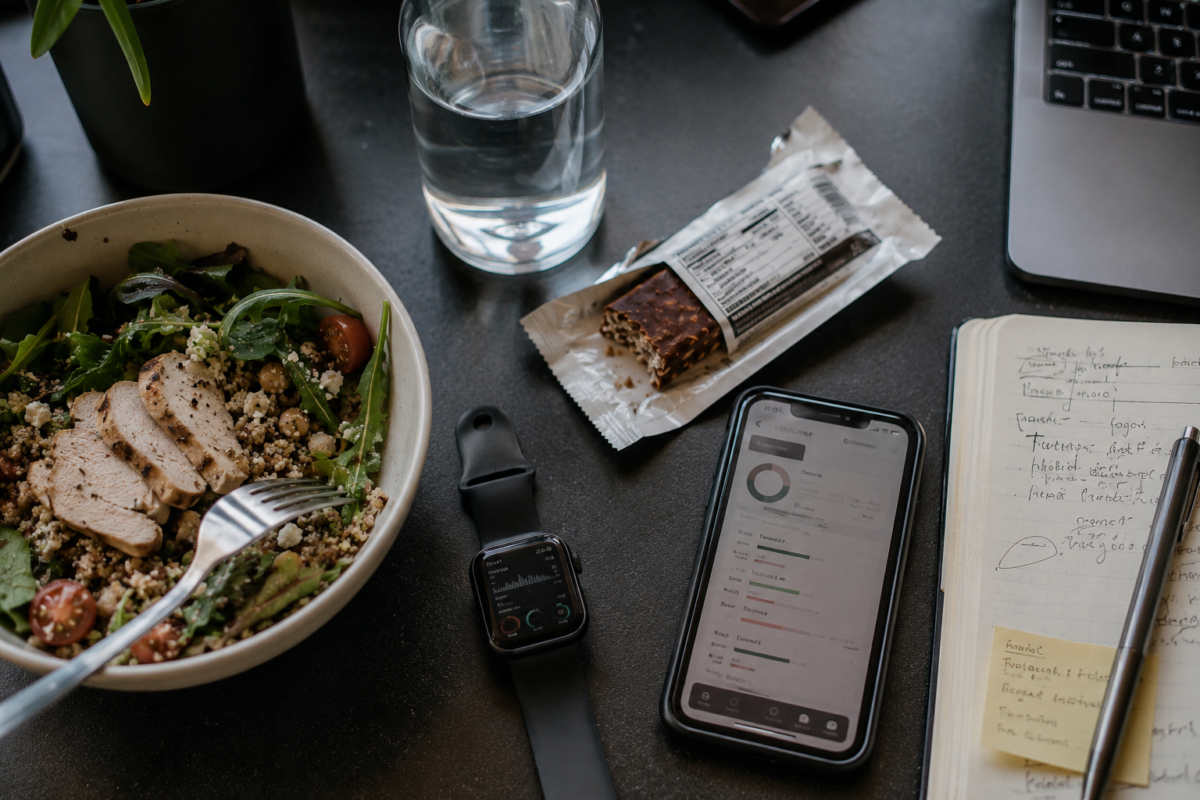 Tracking can make nutrition easier to understand while making eating increasingly difficult to experience without evaluation.
Maybe Taste Was Never Replaced
The title of this story asks when we started eating numbers instead of food.
That may be slightly unfair.
Most people still care deeply about flavour.
They want enjoyment.
Comfort.
Texture.
Tradition.
A reason to look forward to the next bite.
What changed is that pleasure increasingly needs a defence.
The food must taste good and contain enough protein.
Feel indulgent and remain low in calories.
Provide convenience and support a future goal.
We did not stop wanting food.
We started demanding that food justify itself.
David is powerful because it offers that justification before the consumer has to ask.
The numbers are large.
The calories are small.
The choice feels resolved.
Eat it and continue.
What Happens When Every Food Is Optimised?
If every category continues moving in this direction, the supermarket of the future may look familiar but behave completely differently.
Every pleasure will have a performance version.
Every comfort food will contain a functional upgrade.
Every indulgence will arrive with a set of numbers designed to remove the guilt.
There is obvious value in that.
Consumers with specific nutritional goals gain more options.
Convenient food can become more useful.
Dessert does not have to be nutritionally empty.
But something may also be lost when every eating occasion becomes an opportunity for optimisation.
Not every meal needs to improve us.
Some meals connect us.
Some slow us down.
Some exist because they taste like childhood.
Some are inefficient and still worth eating.
David’s rise does not prove that consumers have rejected those experiences.
It proves that another form of eating has become powerful enough to build a major brand around.
An eating culture in which the label is not background information.
It is the main event.
BRANDDIP TAKE
David Protein did not convince consumers to replace food with numbers. Fitness apps, wearables, wellness culture and the logic of optimisation had already trained us to look at eating that way. David simply gave the behaviour its clearest product: a snack whose most desirable flavour may be efficiency itself.
DISCOVER DAVID PROTEIN
Explore David Protein’s bars, frozen desserts and product philosophy through the brand’s official website.
WORDS · BRANDDIP
CATEGORY · TASTE OF BRAND
NEW YORK, UNITED STATES