
Labubu: When Did Buying a Toy Start Feeling Like Winning?
A woman opens a small cardboard box while her phone records from above.
She already paid for what is inside.
She still does not know what she bought.
The foil bag tears.
Two pointed ears appear.
Then the face.
Not the rare one.
For a moment, disappointment.
Then another box moves into frame.
WORDS BY BRANDDIP · HONG KONG / BEIJING / THE WORLD
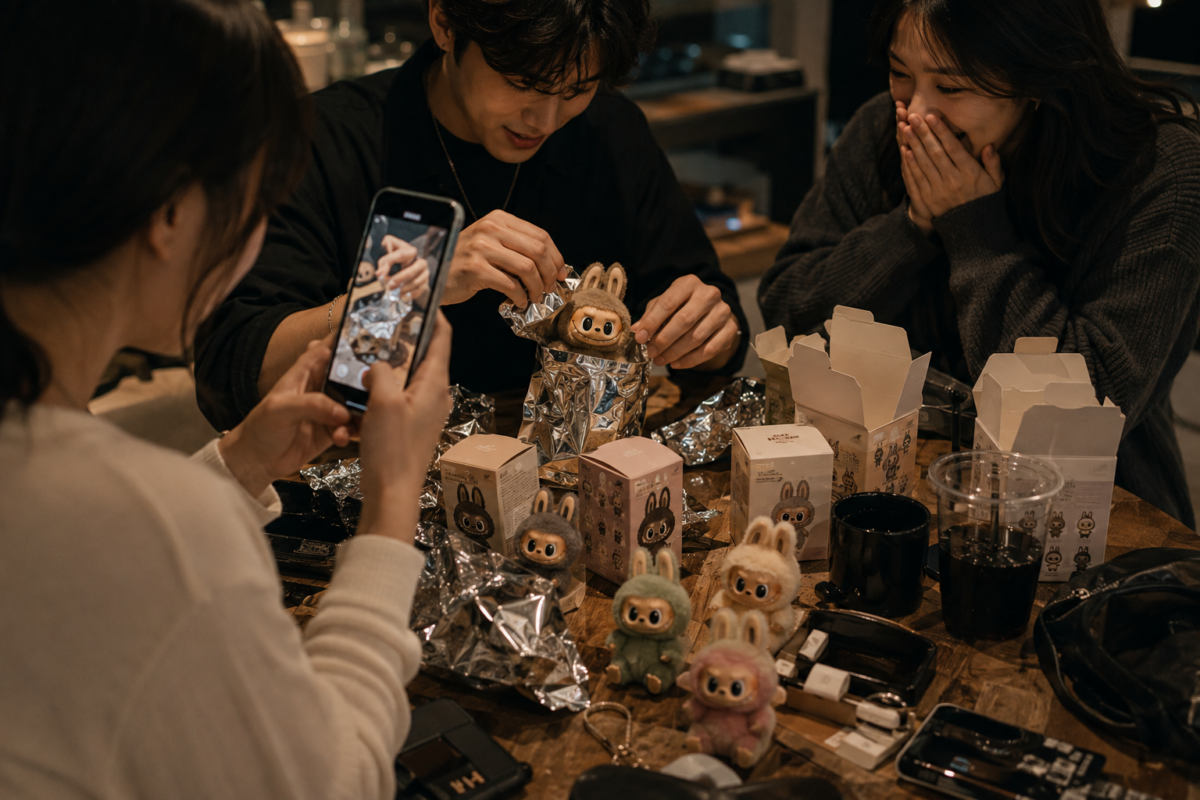 With Labubu, paying is only the beginning. The emotional climax arrives when the box finally opens.
Buying something usually ends uncertainty.
You choose.
You pay.
You receive the object you selected.
Labubu reorganised that sequence.
First you want the character.
Then you wait for a drop.
You compete with bots, resellers and thousands of other shoppers.
If you manage to buy a box, you still may not receive the version you wanted.
And somehow, each layer of uncertainty can make the object feel more desirable.
The purchase does not deliver control.
It creates suspense.
Labubu began as one character inside The Monsters, a fairy-tale world created by Hong Kong-born artist Kasing Lung in 2015.
With tall pointed ears, a wide serrated grin and an expression that sits somewhere between mischievous and threatening, Labubu did not look like the safest candidate for global cuteness.
That may have helped.
By the time Pop Mart transformed the character into figures, blind boxes and plush pendants, consumers were surrounded by cute products engineered to be instantly agreeable.
Labubu looked as though it might bite.
That difference became recognisable from across a room.
Then from across a street.
Then from across the internet.
Plush versions began hanging from luxury handbags.
Unboxing videos multiplied.
Stores drew long lines.
Rare editions reached extraordinary resale prices.
Counterfeits became common enough to acquire their own nickname: Lafufu.
By the end of 2025, cumulative Labubu sales had reportedly passed 100 million units worldwide.
But the scale alone does not explain the obsession.
The more interesting question is:
Why did receiving a toy become less exciting than successfully obtaining the chance to receive it?
The Toy Was Not Hidden by Accident
A traditional toy package shows the product clearly.
The child points.
The parent buys.
Expectation and outcome remain closely connected.
A blind box removes that certainty.
The outside presents a family of possible characters.
Inside is one.
Occasionally, there is a secret edition with much lower odds.
This changes the role of the package.
It no longer protects the object.
It protects the surprise.
The consumer is not simply buying a figure.
They are buying several seconds during which almost anything still feels possible.
That anticipation creates a natural performance.
Hold the sealed box.
Shake it.
Guess the weight.
Open the cardboard.
Find the foil.
Record the reveal.
React.
Show the audience.
Few conventional products produce such a clean piece of social content without additional planning.
The blind box arrives with its own beginning, tension and conclusion.
Even disappointment is usable.
The collector sighs.
The comments recommend trading.
Someone asks to buy the duplicate.
Another box is opened.
Labubu does not merely fit inside social media.
The purchase already behaves like a video.
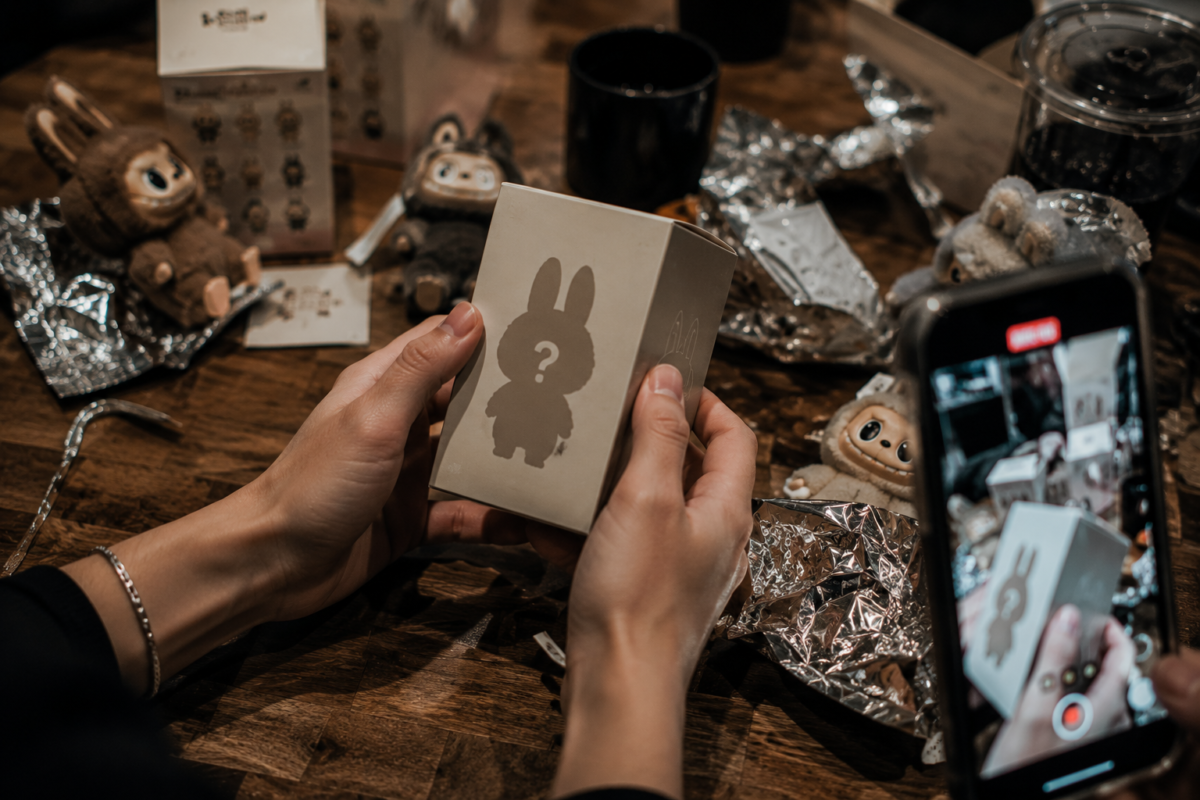 The sealed package can hold more emotional value than the object once its identity is known.
Scarcity Turned Shopping Into Competition
Wanting an object feels different when the object appears to be waiting for you.
A shelf full of identical stock allows hesitation.
You can compare.
Leave.
Return later.
Labubu offered a very different rhythm.
New collections arrived as drops.
Popular products vanished quickly.
Restocks became events.
Online shoppers entered queues only to watch products disappear.
Physical stores attracted crowds large enough that some locations changed the way releases were handled.
Consumers were no longer evaluating whether they wanted a toy.
They were deciding how quickly they could act before someone else took it.
This is the psychological power of scarcity.
It shortens the distance between desire and action.
The question changes from:
Do I really want this?
To:
Can I get it before it is gone?
Success creates relief before the product has even arrived.
A completed checkout feels like a small victory.
The purchase confirmation becomes shareable evidence.
The collector has not simply spent money.
They have beaten the queue.
Scarcity also creates knowledge.
Fans learn release times.
Series names.
Secret ratios.
Authenticity details.
Regional availability.
The difference between a casual buyer and an insider becomes visible through what each person knows.
This gives the community its own language.
And when access requires knowledge, time and speed, ownership begins to feel earned.
Adults Did Not Suddenly Discover Toys
Adults have always collected.
Art.
Watches.
Sneakers.
Trading cards.
Porcelain.
Records.
None of this is culturally surprising.
The discomfort appears when the collectible still looks like a child’s toy.
Labubu exposes how arbitrary that distinction can be.
A limited sneaker is accepted as design culture.
A vinyl figure may be dismissed as immaturity.
Yet both can involve artist collaboration, scarcity, authentication, display, resale and social belonging.
The object changes.
The collecting behaviour remains remarkably similar.
Labubu arrived during the continued growth of the “kidult” market, where adults purchase toys for themselves rather than for children.
Some are motivated by nostalgia.
Some by visual design.
Some by the comfort of repetition.
Some by the chase.
And some simply want a strange little face hanging from a serious handbag.
Calling the behaviour childish misses the point.
Adult life has not eliminated play.
It has made play something consumers increasingly purchase in scheduled, collectable and displayable forms.
The Bag Charm Changed Everything
A figure on a shelf is private.
A plush pendant on a bag moves through the city.
This may be the most important transformation in Labubu’s rise.
The character stopped being something consumers collected at home and became something they wore in public.
Attached to handbags, backpacks and belt loops, Labubu entered fashion without needing to become clothing.
The contrast did much of the work.
A polished leather bag.
A carefully constructed outfit.
Then a grinning, furry monster swinging from the handle.
The charm interrupted good taste just enough to make the whole look feel more personal.
Luxury fashion can become overly resolved.
Every element appears intentional.
Every surface communicates control.
Labubu introduces something less disciplined.
Humour.
Chaos.
A hint of ugliness.
The wearer can own an expensive bag without appearing to take the bag—or themselves—too seriously.
Celebrity visibility accelerated the association, but the product worked because ordinary consumers could reproduce the styling gesture.
They did not need the same handbag.
They needed the charm.
A collectible becomes fashion when ownership can be recognised before anyone enters your home.
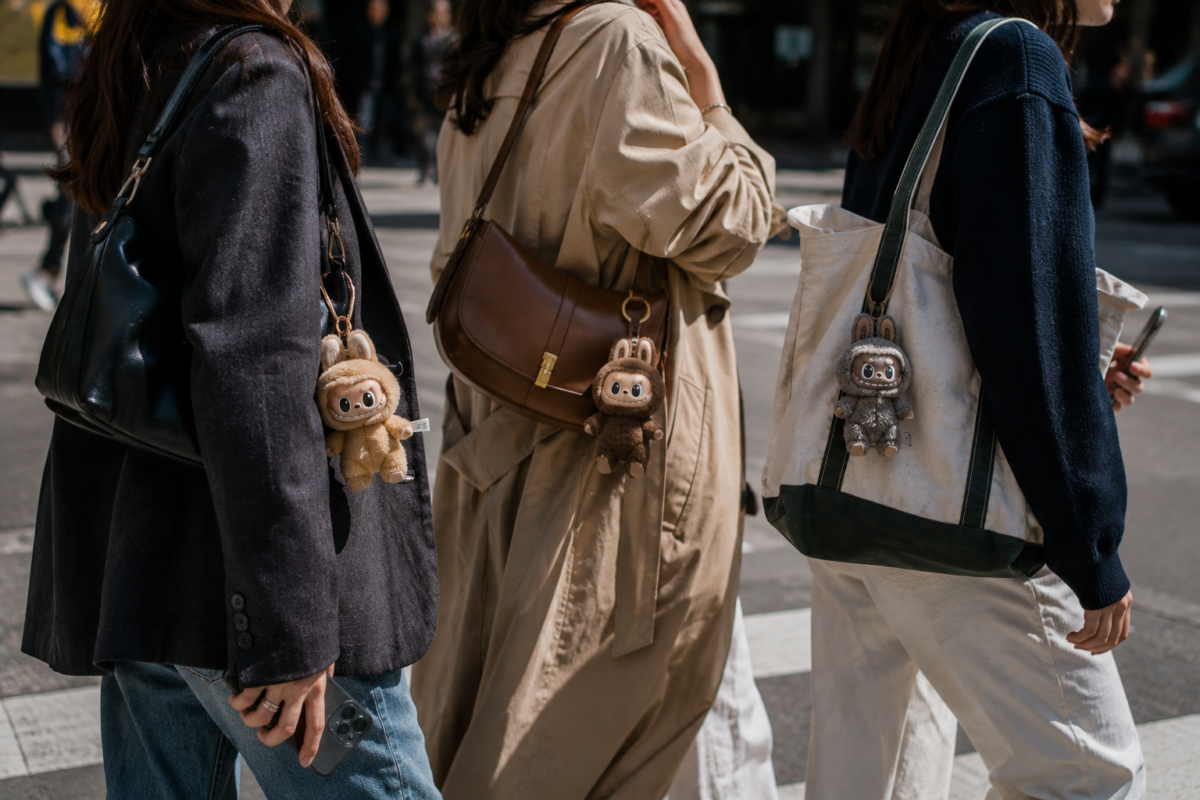 Once the collectible moved onto handbags, Labubu became a public signal rather than a private collection.
It Was Cute, but Not Too Cute
Labubu’s face matters.
Many successful characters are soft, round and emotionally transparent.
They invite immediate affection.
Labubu offers uncertainty.
The ears suggest a rabbit.
The body can appear childlike.
Then the nine pointed teeth change the mood.
Is it smiling?
Plotting something?
Trying to help?
About to create a problem?
Kasing Lung describes Labubu as kind-hearted but prone to causing accidents while trying to help.
That contradiction gives the character more personality than perfect sweetness might allow.
Consumers can project different identities onto it.
Mischievous.
Anxious.
Chaotic.
Protective.
Ugly.
Adorable.
The ambiguity is useful because it prevents the character from feeling limited to childhood.
Labubu participates in a broader appetite for “ugly-cute” design: objects appealing precisely because they resist conventional beauty.
Perfection can become anonymous.
A flaw creates recognition.
In Labubu’s case, the flaw is a mouth full of teeth.
Duplicates Were Not Always Failure
Blind boxes inevitably create duplicates.
Under ordinary retail logic, receiving the same product twice would feel like a mistake.
Inside collector culture, the duplicate can continue moving.
It can be traded.
Sold.
Gifted.
Customised.
Used to negotiate for the missing version.
This movement extends the life of the purchase beyond the unboxing.
Collectors meet through trades.
Communities create local rules.
Lists of wanted and available figures circulate online.
The unwanted object becomes social currency.
This is one reason collecting can be more adhesive than ordinary consumption.
A single finished purchase closes the relationship.
A collection creates absence.
There is always another figure not yet owned.
The empty space becomes part of the product system.
Completion is promised but constantly postponed.
Counterfeits Proved How Far the Desire Had Travelled
Every major craze produces imitation.
Labubu produced Lafufu.
The name became a joke, a warning and sometimes a separate aesthetic category.
Counterfeit products spread because authentic supply could not satisfy demand at every price point and location.
Some buyers were deceived.
Others knowingly bought the cheaper substitute.
Social media filled with authenticity checks.
Count the teeth.
Inspect the stamp.
Scan the code.
Check the face.
Compare the feet.
The fake market strengthened another aspect of collecting: expertise.
The object no longer needed only to be owned.
It needed to be verified.
Authenticity gave the collector another opportunity to demonstrate knowledge.
But the counterfeit boom also revealed the less charming side of scarcity.
Fake products raised safety concerns.
Buyers paid inflated prices for uncertain goods.
Fear of missing out pushed consumers toward unreliable sellers.
The desire to participate became strong enough that even an imitation could feel preferable to exclusion.
At Some Point, the Price Stopped Belonging to the Toy
A blind-box figure begins with a relatively accessible retail price.
Scarcity can detach the secondary-market price from that original number almost immediately.
A rare edition sells for multiples of retail.
A discontinued release becomes an asset.
A human-sized one-of-one figure reaches the auction world.
In 2025, a 131-centimetre mint-green Labubu sold at a Beijing auction for 1.08 million yuan—more than $150,000 at the time.
At that point, the price was no longer paying for vinyl, fur or manufacturing.
It paid for rarity.
Provenance.
Attention.
The right to own the version almost nobody else could obtain.
This is where collecting begins to resemble financial speculation.
Some buyers stop asking what the object means to them and start asking what someone else might pay later.
The emotional object becomes a market instrument.
That does not make every collector an investor.
Many genuinely love the character.
But once resale values become visible, affection and calculation occupy the same shelf.
The Craze Could Not Remain at Its Peak
No viral object remains culturally urgent forever.
By 2026, signs of cooling had appeared in the United States.
Traffic to Pop Mart’s US digital platforms fell sharply from its 2025 peak, while some transaction data indicated weakening sales momentum.
The company continued growing overall, particularly in China, and Labubu remained commercially enormous.
But the question had changed.
Could Labubu become a lasting character?
Or had consumers mostly been chasing the moment when everyone else wanted one?
This distinction matters.
A craze depends on acceleration.
More posts.
Longer queues.
Higher resale prices.
More visible celebrity ownership.
A durable character must survive after acceleration stops.
It needs emotional meaning when the object is easy to find.
It needs a world deeper than the drop.
It needs collectors who still care after casual consumers move on.
Pop Mart’s response has been to expand Labubu beyond the original blind-box moment.
Smaller charms.
Large-scale figures.
Collaborations.
Home objects.
Food.
Potential film entertainment.
The strategy is clear.
Turn a product craze into a character universe.
Whether that succeeds will determine if Labubu becomes a long-term cultural property or the most recognisable souvenir of one extraordinary consumer cycle.
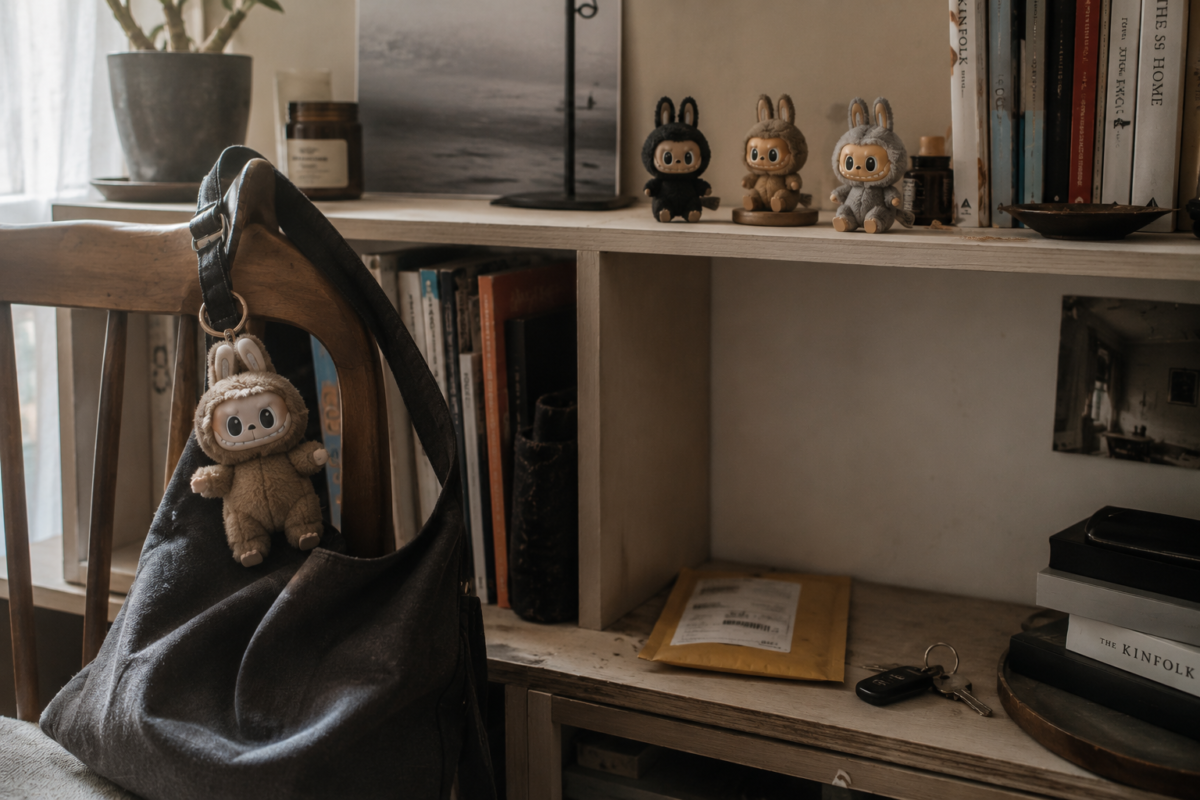 The real test begins when the queue disappears and the collectible must matter without scarcity doing the work.
Maybe the Chase Was the Collection
Collectors often say they love the object.
That is probably true.
But objects do not explain the whole intensity of Labubu.
The deeper pleasure may have lived around the object.
Knowing the release time.
Refreshing the page.
Entering the queue.
Receiving the shipping notification.
Feeling the sealed box in your hand.
Opening it with friends.
Finding the one you wanted.
Or failing, then trying again.
The character gave all of those actions a face.
But the system gave them momentum.
This is what made Labubu more than a popular toy.
It transformed shopping into an event with stakes, suspense and visible winners.
Adults did not simply return to toys.
They encountered a form of play perfectly adapted to contemporary consumer life.
Limited.
Algorithmic.
Photogenic.
Tradable.
Portable.
And never fully complete.
BRANDDIP TAKE
Labubu became irresistible not only because people loved the character, but because Pop Mart turned ownership into a game. The blind box created suspense, scarcity created competition and social media made every win visible. The toy was the prize—but for many consumers, the chase may have been the product all along.
DISCOVER LABUBU
Explore Labubu and The Monsters collections through Pop Mart’s official store.
WORDS · BRANDDIP
CATEGORY · TASTE OF BRAND
HONG KONG / BEIJING / GLOBAL