
CHAGEE: Why Is Everyone Waiting So Long for a Cup of Tea?
CHAGEE has grown into a network of more than 7,500 teahouses with 50 million active members. But the clearest sign of its cultural momentum may be much simpler: people are willing to wait.
WORDS BY BRANDDIP · YUNNAN / SEOUL / THE WORLD
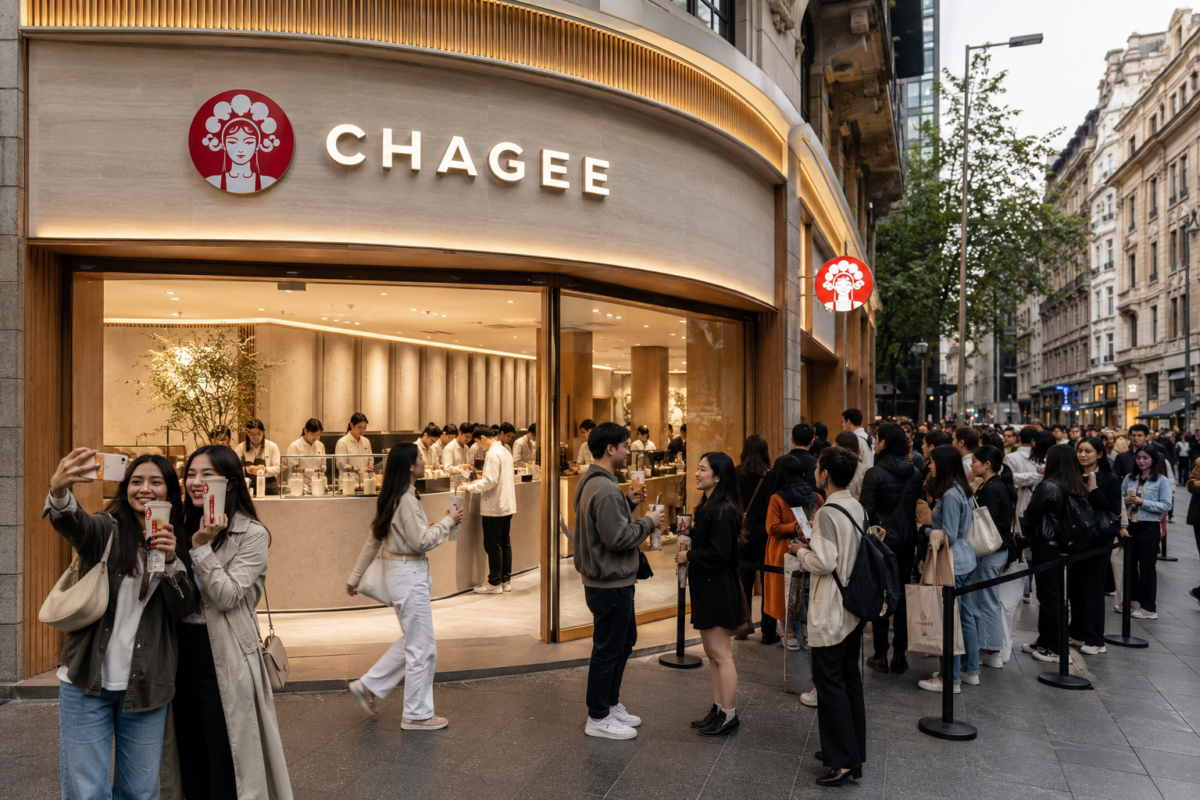
At CHAGEE, waiting for tea can feel less like an inconvenience and more like proof that you have arrived at the right moment.
On May 1, 2026, the ordering app for a newly opened CHAGEE store in Seoul displayed an unusual number.
1,141 cups were waiting to be made.
The estimated wait reached 951 minutes—almost sixteen hours.
That does not necessarily mean every customer stood outside the store until the following morning.
But it does reveal something equally strange.
A cup of tea had generated more demand than the ordinary act of buying a drink could contain.
Elsewhere in Seoul, opening-week customers faced physical queues stretching for several hours. Some stayed. Some photographed the crowd. Some checked the wait and left.
Even the people who gave up still had a story to tell.
They had gone to see what everyone else was waiting for.
CHAGEE began in Yunnan, China, in 2017. By the first quarter of 2026, its network had reached 7,531 teahouses and its active membership had grown to 50 million.
Those numbers explain the company’s scale.
They do not fully explain the queue.
To understand that, the more interesting question is not whether CHAGEE makes good tea.
It is this:
When does trying a drink begin to feel like participating in a cultural moment?
The Queue Wasn’t Outside the Product
We normally treat waiting as a failure.
A slow kitchen.
A broken ordering system.
Not enough staff.
Too many people in too little space.
But a visible queue communicates something a campaign cannot manufacture quite as easily.
Other people have already decided this is worth their time.
Every person who joins makes the decision slightly easier for the next person.
The line becomes a public review written with bodies rather than stars.
For a new brand entering an unfamiliar market, that matters.
CHAGEE arrived in South Korea on April 30, 2026, opening three Seoul locations at the same time. The brand was already familiar to some customers through travel, social media and Korean celebrities who had been seen drinking it.
But familiarity alone does not create a four-hour wait.
The crowd transformed awareness into urgency.
You could visit next week.
You could order another milk tea somewhere else.
But then you would miss the brief moment when everyone appeared to be discovering the same thing at once.
The first sip may belong to the customer.
The wait belongs to the crowd.
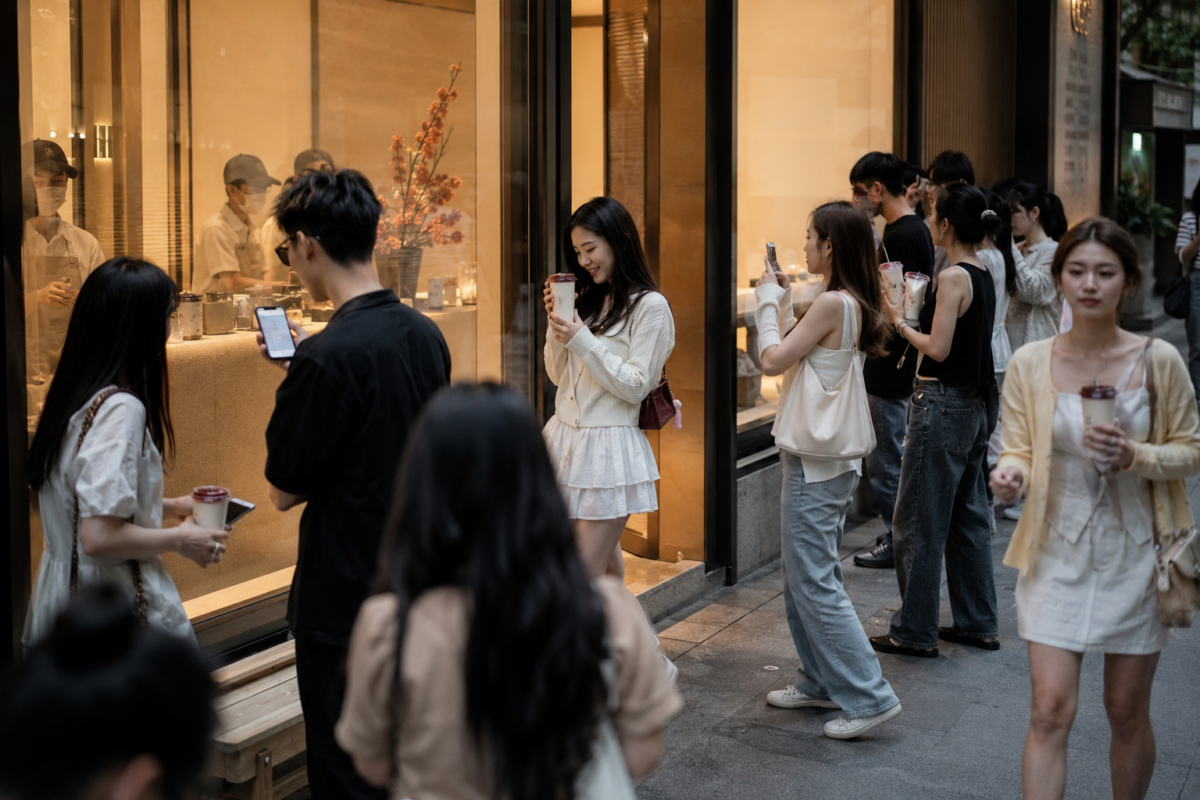 A queue does more than delay a purchase. It tells every passerby that something inside may be worth discovering.
The Cup Arrived Before the Store
There was a time when entering a new country meant beginning again.
A brand opened a store.
People discovered it.
Word slowly travelled outward.
That order has collapsed.
Now the product can arrive culturally long before it arrives physically.
Someone encounters it while travelling.
Someone else sees it in a celebrity’s hand.
A friend posts the packaging.
A short video explains what to order.
By the time the doors officially open, part of the audience already feels late.
CHAGEE’s Korean launch makes this especially visible.
Some customers had tried it in China or Southeast Asia and wanted to recover a familiar taste. Others knew it only through photographs, recommendations and clips circulating online.
Both groups arrived with a memory.
One remembered the drink.
The other remembered wanting it.
This is how global brands increasingly travel.
Not as completely unknown foreign arrivals, but as partially familiar objects waiting for a physical address.
The store opening is no longer the beginning of the story.
It is the moment an existing digital desire becomes locally available.
Tea Learned the Rhythm of Coffee
Tea has never lacked culture.
It has ceremony, geography, craft, history and highly specific ways of being prepared.
What it has sometimes lacked is a contemporary daily format capable of travelling at the same speed as coffee.
Coffee chains made repetition desirable.
The same route.
The same order.
The same cup on the way to work.
Tea, by comparison, has often been placed at one of two extremes.
Either traditional and ceremonial.
Or sweet, colourful and overloaded with toppings.
CHAGEE occupies the space between them.
Its signature drinks use brewed tea leaves and fresh milk, prepared to order but presented through the speed, visual consistency and digital convenience of a modern beverage chain.
The result is not a rejection of tea tradition.
It is a different delivery system for it.
The consumer does not need to choose between studying tea and treating it like dessert.
They can simply make it part of Tuesday afternoon.
CHAGEE did not make tea less cultural.
It made tea easier to repeat.
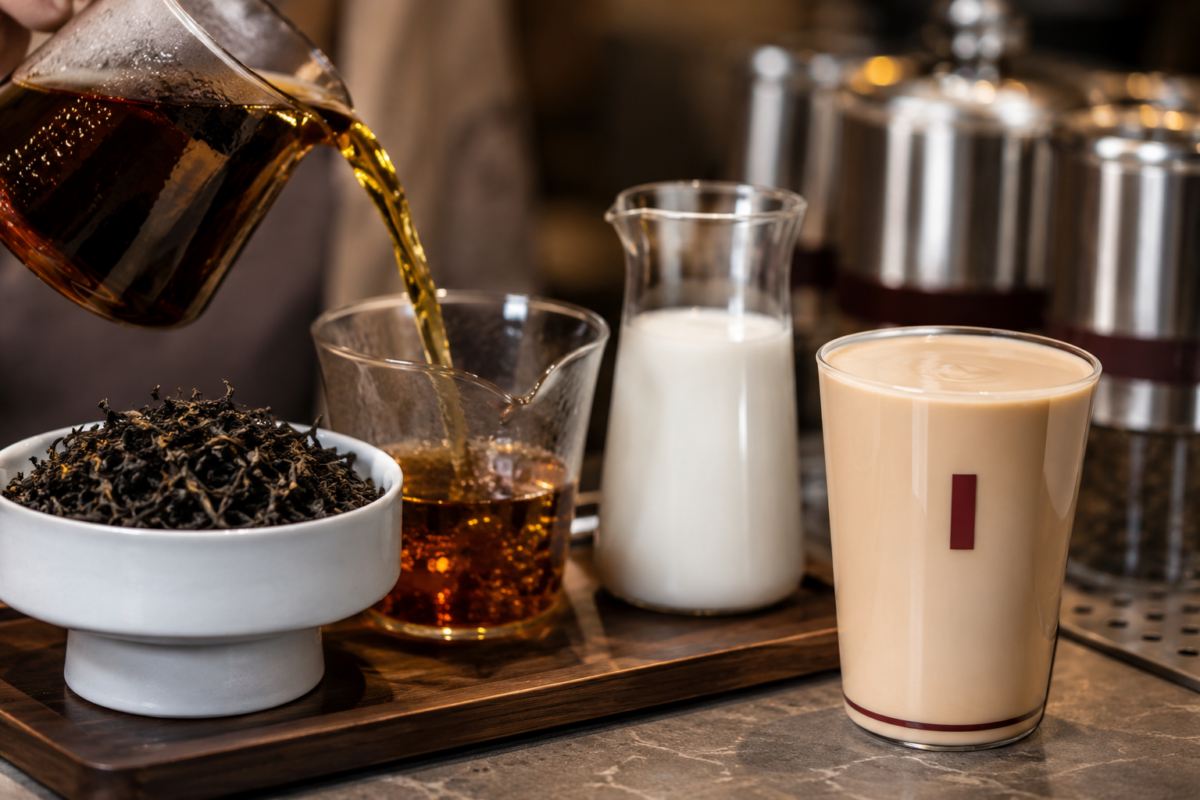 CHAGEE packages the flavour and ritual of brewed tea inside the rhythm of a contemporary daily beverage.
It Looks Premium Without Asking for Silence
Premium tea used to come with behavioural instructions.
Sit down.
Slow down.
Pay attention.
Use the right cup.
Recognize the origin.
CHAGEE borrows the visual confidence of premium culture without demanding that consumers become experts before entering.
The shops feel deliberate.
The cups photograph well.
The drinks look restrained compared with the visual chaos associated with some milk tea chains.
Yet the experience remains casual enough to carry through a shopping mall.
This balance is crucial.
Luxury can attract attention, but too much reverence creates distance.
Convenience can encourage repetition, but too much familiarity removes discovery.
CHAGEE lets the consumer feel that the drink is elevated without making the experience intimidating.
It feels special enough to visit and ordinary enough to repeat.
The Packaging Gives the Experience Somewhere to Go
A beverage disappears quickly.
The evidence remains longer.
The cup on a desk.
The carrier bag on the subway.
The receipt tucked into a pocket.
The photograph uploaded before the ice has melted.
During CHAGEE’s early days in Seoul, customers commented not only on the drink but on cups and receipts that felt too attractive to throw away.
That reaction matters because modern beverage brands rarely remain inside the store.
The product becomes mobile advertising, but it also becomes a temporary personal accessory.
For the next twenty minutes, the consumer is not simply drinking tea.
They are visibly someone who made it through the queue.
Someone who knows what to order.
Someone who has already experienced the thing other people are still discussing.
That does not make the drink superficial.
It shows that taste now moves through more than the mouth.
The cup carries the tea.
The customer carries the meaning.
A New Kind of Chinese Brand Is Travelling
CHAGEE’s expansion is also part of a larger change in how Chinese consumer brands are encountered abroad.
For years, many global consumers experienced Chinese manufacturing without necessarily forming relationships with Chinese brands.
The object arrived.
The brand identity often did not.
That is changing.
Companies in food, beauty, toys, technology and retail are increasingly travelling with their own names, visual systems and cultural references intact.
They are not always disguising where they came from in order to appear global.
Instead, origin can become part of the curiosity.
CHAGEE begins in Yunnan and speaks through tea, but the environment surrounding that tea is designed to move through Seoul, Singapore, Los Angeles or Kuala Lumpur without becoming a museum display of Chineseness.
Its cultural identity is visible.
Its consumer language is international.
That combination helps explain why the brand can feel foreign and familiar at the same time.
The Hard Part Begins When the Queue Gets Shorter
A queue is powerful.
It is not permanent.
Eventually, the launch ends.
The celebrity association becomes old information.
The cup has already appeared on everyone’s feed.
The customer can order without planning an afternoon around it.
That is when a brand discovers whether people wanted the product or merely wanted the moment.
CHAGEE enters this stage with extraordinary scale.
In the first quarter of 2026, the company reported 50 million active members. Its overseas gross merchandise value rose 139 percent from the same period a year earlier.
But growth is not perfectly simple.
The company also reported declining same-store performance in Greater China, where competition among tea chains remains intense.
That contrast makes CHAGEE more interesting, not less.
The brand is simultaneously established and unfinished.
Enormous in its home market.
Still new enough to create opening-day chaos elsewhere.
Its future will not be decided by whether consumers wait sixteen hours once.
It will be decided by whether they return when the wait is sixteen minutes.
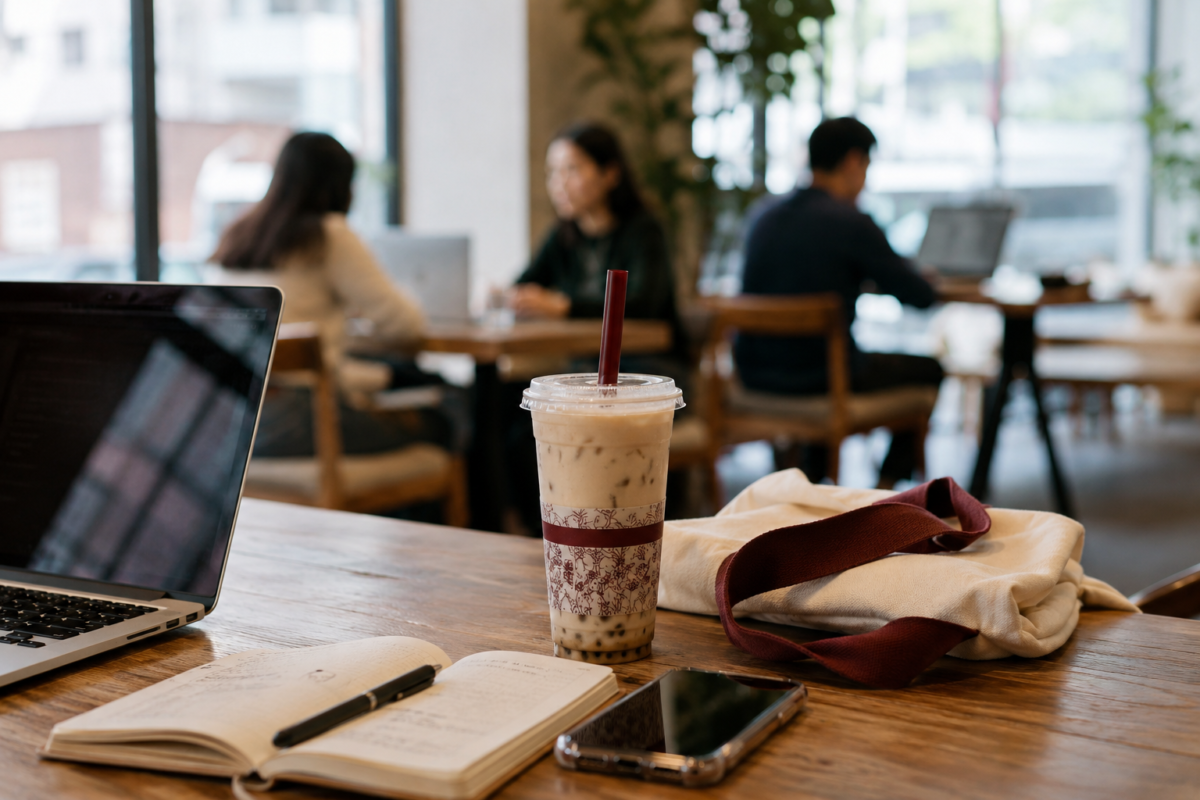 The real test begins when a must-try drink becomes an ordinary part of someone’s week.
Maybe People Aren’t Waiting Only for Tea
It would be easy to dismiss the line as hype.
Sometimes it is.
A new store opens.
A celebrity mentions it.
The crowd arrives.
The internet moves on.
But the speed of CHAGEE’s overseas growth suggests something larger is happening around the cup.
Consumers are becoming more comfortable discovering major lifestyle brands from China without waiting for Western culture to validate them first.
Tea is being reorganized around modern daily behaviour rather than preserved only as tradition.
And the physical store has become the final stop in a desire that may have travelled through several countries and hundreds of screens before reaching the customer.
This is why the queue matters.
Not because waiting automatically proves quality.
Not because every fashionable drink becomes culturally important.
But because a line makes private curiosity publicly visible.
For a few weeks, everyone can see desire building in real time.
One person joins because they love tea.
Another joins because a friend recommended it.
Another wants the photograph.
Another simply wants to understand the crowd.
By the time they reach the counter, those motivations have become almost impossible to separate.
BRANDDIP TAKE
CHAGEE is not fascinating because it convinced people to wait for milk tea. It is fascinating because the wait turned a familiar drink into evidence that global taste was shifting in public.
DISCOVER CHAGEE
Explore CHAGEE’s modern tea culture, products and international locations through the brand’s official global website.
WORDS · BRANDDIP
CATEGORY · TASTE OF BRAND
YUNNAN, CHINA / GLOBAL