
Arc’teryx: When Did Looking Prepared Become Fashion?
It is 8:12 on a wet Tuesday morning in Shoreditch.
A black waterproof shell walks into a coffee shop.
Then another.
Then a third.
None of the people wearing them appears to be going anywhere remotely dangerous.
One carries a laptop.
Another is checking Slack.
The third is balancing a flat white and a bicycle helmet.
Outside, the rain is steady but unremarkable.
Inside, everyone looks dressed for a weather event more serious than the one actually happening.
No one looks twice.
That may be the most revealing part.
WORDS BY BRANDDIP · VANCOUVER / LONDON / THE WORLD
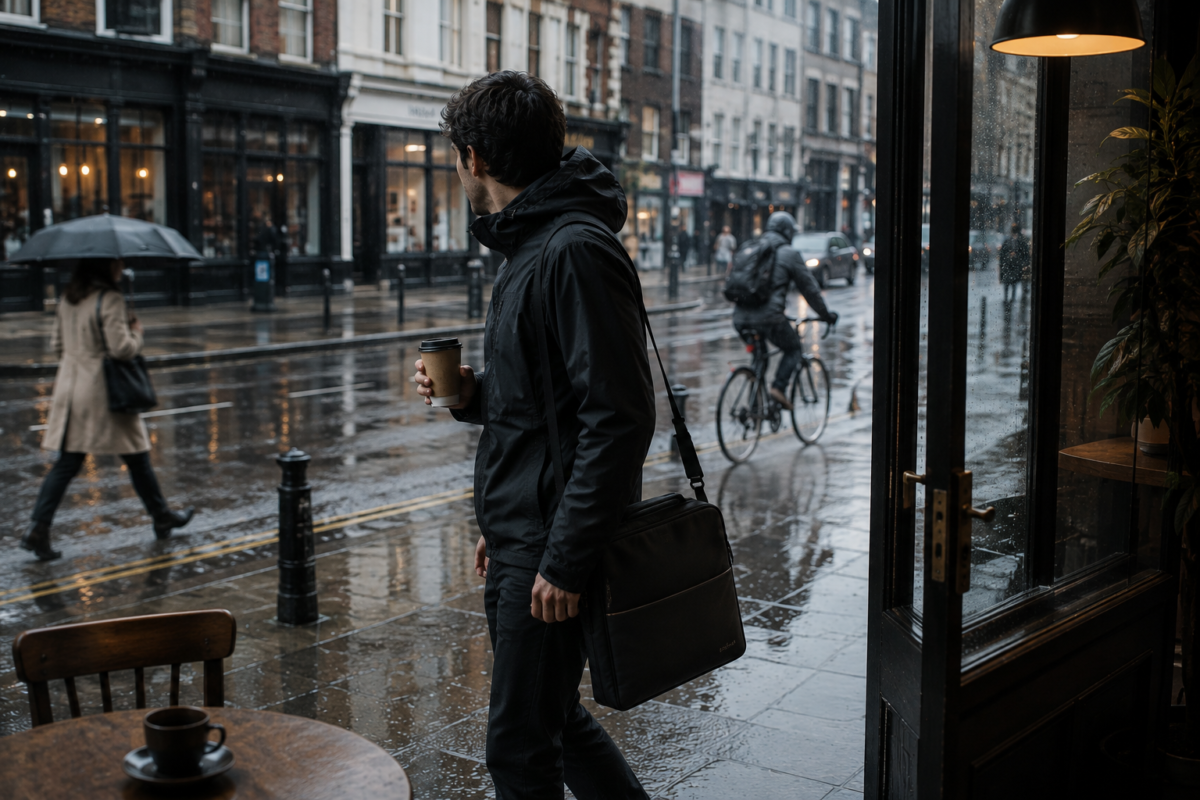 Arc’teryx became desirable not because city life turned into mountaineering, but because looking prepared began to carry its own kind of status.
Arc’teryx was built for conditions in which mistakes matter.
Cold.
Wind.
Rain.
Elevation.
Rock.
Snow.
The brand’s most recognisable jackets were developed for people who could not simply step indoors when the weather became inconvenient.
Then those jackets began appearing in places where shelter was never more than a few metres away.
Subway platforms.
Airports.
Design studios.
University campuses.
Technology offices.
Restaurants.
Neighbourhood coffee shops.
The mountain shell became a city uniform.
It would be easy to explain this as another fashion cycle.
Outdoor clothing became fashionable.
Gorpcore happened.
Celebrities wore technical jackets.
Consumers followed.
All of that is true.
It is also incomplete.
The deeper shift was not simply that outdoor clothing entered fashion.
Preparedness itself became fashionable.
Arc’teryx does not merely make people look adventurous.
It makes them look difficult to inconvenience.
The City Did Not Become the Mountain
Most people wearing Arc’teryx in London, Seoul or New York are not pretending the pavement is a climbing route.
They know where they are.
The jacket works because the city creates its own smaller forms of friction.
A delayed train.
A sudden downpour.
A windy cycle home.
A cold airport terminal.
A weekend trip packed into one bag.
Three different environments between breakfast and dinner.
Urban life rarely presents the dramatic danger of the mountain.
It produces constant low-level unpredictability instead.
Technical clothing offers a simple response:
You do not need to know exactly what will happen next.
The jacket has already accounted for several possibilities.
That feeling is more emotionally valuable than the garment’s specifications alone might suggest.
It turns uncertain weather into a manageable detail.
It removes one decision from the morning.
It allows the wearer to continue moving while other people stop to find shelter.
The mountain credibility remains essential.
But in the city, it becomes evidence supporting a different promise.
Whatever happens, you will probably be fine.
Fashion Used to Display Wealth
Traditional luxury made status visible through rarity and delicacy.
Fine leather.
Polished hardware.
Precious materials.
Objects whose vulnerability was part of their appeal.
You did not wear them into heavy rain.
You protected them from the weather.
Technical luxury reverses that relationship.
The object protects you.
It is expensive not because it needs to be handled carefully, but because it promises that you will not have to be.
This changes what the purchase communicates.
A traditional luxury coat might say:
I can afford something beautiful.
A premium technical shell says:
I bought the version designed not to fail.
One signals possession.
The other signals capability.
This is why Arc’teryx cannot be fully understood as quiet luxury, even when the visual similarities are obvious.
Both favour restraint.
Both often minimise branding.
Both reward consumers who recognise subtle codes.
But quiet luxury whispers:
I know what good taste looks like.
Arc’teryx whispers:
I am ready.
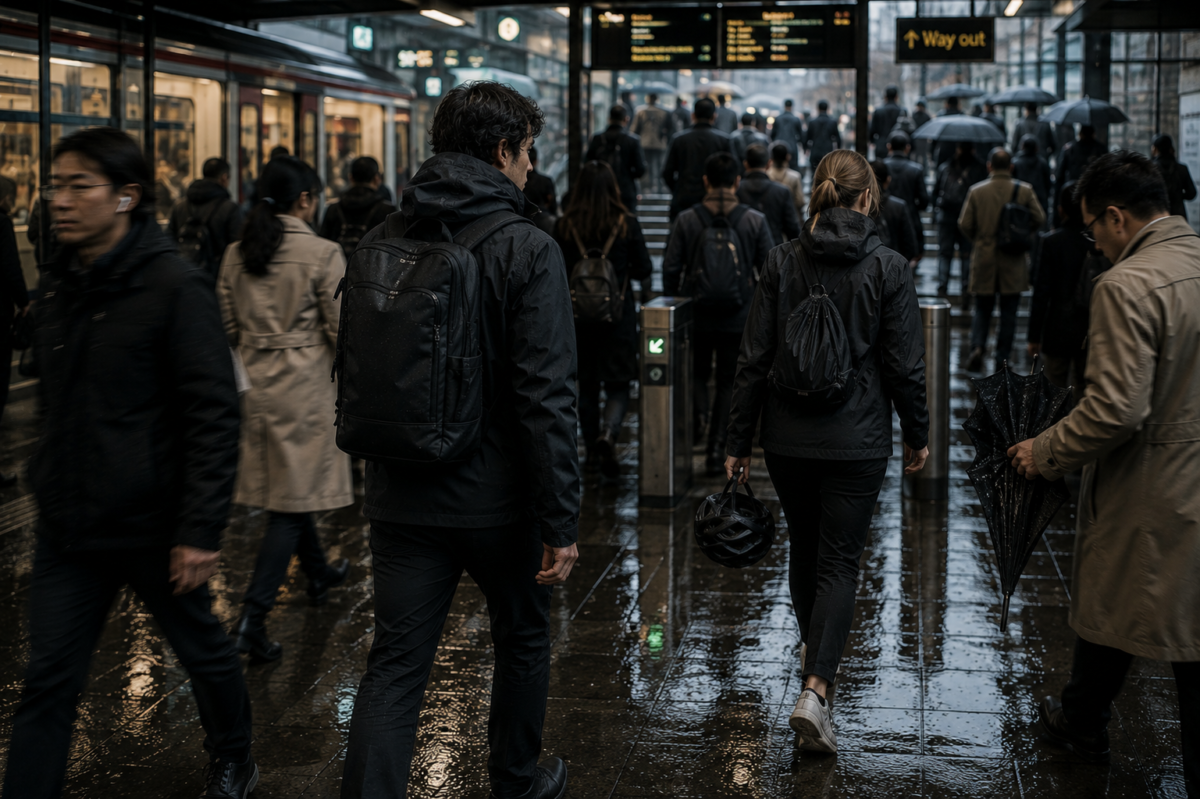 Technical outerwear no longer waits for the weekend. Its promise is tested through commutes, weather changes and the constant movement of ordinary urban life.
The Jacket Says Something Before the Wearer Does
Technical clothing developed a social language of its own.
It suggests that the wearer checks the forecast.
Packs efficiently.
Knows which train to take.
Owns the right adapter.
Can walk instead of waiting for a taxi.
Could leave for a weekend trip without rebuilding their entire wardrobe.
None of these assumptions needs to be true.
Clothing has never required perfect honesty.
A suit can suggest authority before the wearer speaks.
A band shirt can communicate cultural belonging before anyone asks what they listen to.
A technical shell communicates readiness before anything has happened.
That readiness has become aspirational because contemporary life increasingly rewards adaptability.
Work no longer remains in one office.
Travel does not always separate business from leisure.
Weather feels less predictable.
People move between bicycles, trains, flights, meetings and social plans without returning home to change.
A garment capable of surviving those transitions begins to feel like more than clothing.
It becomes infrastructure.
The Best Jacket Is the One You Stop Thinking About
Fashion usually asks for attention.
A strong silhouette.
A recognisable print.
A detail someone else will notice.
Technical design often pursues the opposite result.
The ideal product disappears while being used.
The hood moves properly with the head.
The pocket is accessible at the right moment.
The rain remains outside.
The body does not overheat.
The wearer continues with the day.
Nothing dramatic happens.
That absence of drama is the product working.
Arc’teryx built its reputation through equipment intended for serious outdoor use, where construction and reliability are not abstract brand language.
In the city, consumers inherit that credibility without needing the original conditions.
The jacket may never reach a summit.
But its ability to do so makes an ordinary commute feel easier to trust.
The mountain supplies the authority.
The city supplies the audience.
Gorpcore Was a Useful Name—Until It Wasn’t
Fashion eventually named the visual shift.
Gorpcore.
Fleece.
Shell jackets.
Trail shoes.
Climbing trousers.
Practical backpacks.
Outdoor garments worn far from the environments that originally justified them.
The name helped people recognise the pattern.
It also made the pattern seem more temporary than the behaviour underneath it.
A fashion term can peak and disappear.
The reasons consumers adopted the clothing may remain.
They still want garments that tolerate weather.
They still move across several environments in one day.
They still prefer objects that age through use rather than collapse under it.
They still admire products backed by technical credibility.
This is why declaring gorpcore “over” does not make Arc’teryx disappear from cities.
The aesthetic can become exhausted while the utility remains intact.
In fact, the end of the trend may strengthen the brand’s position.
When the word loses its novelty, the jacket still keeps the rain out.
The Black Shell Became a Uniform
Arc’teryx products are available in vivid colours.
Yet the urban symbol remains remarkably consistent.
Black.
Sometimes dark navy.
Occasionally grey or muted green.
Colours that reduce the visual distance between outdoor equipment and everyday city clothing.
A bright alpine shell announces its original purpose.
A black one can move quietly between settings.
Office.
Café.
Train.
Restaurant.
Airport.
Trail.
The colour does not make the garment less technical.
It makes the technicality easier to integrate into an existing identity.
The wearer does not need to dress like an outdoor enthusiast.
They can dress like themselves, with one highly capable layer placed over everything else.
This is where function and contemporary taste meet.
Not through excessive futuristic styling.
Through a product whose complexity is largely hidden inside an ordinary-looking surface.
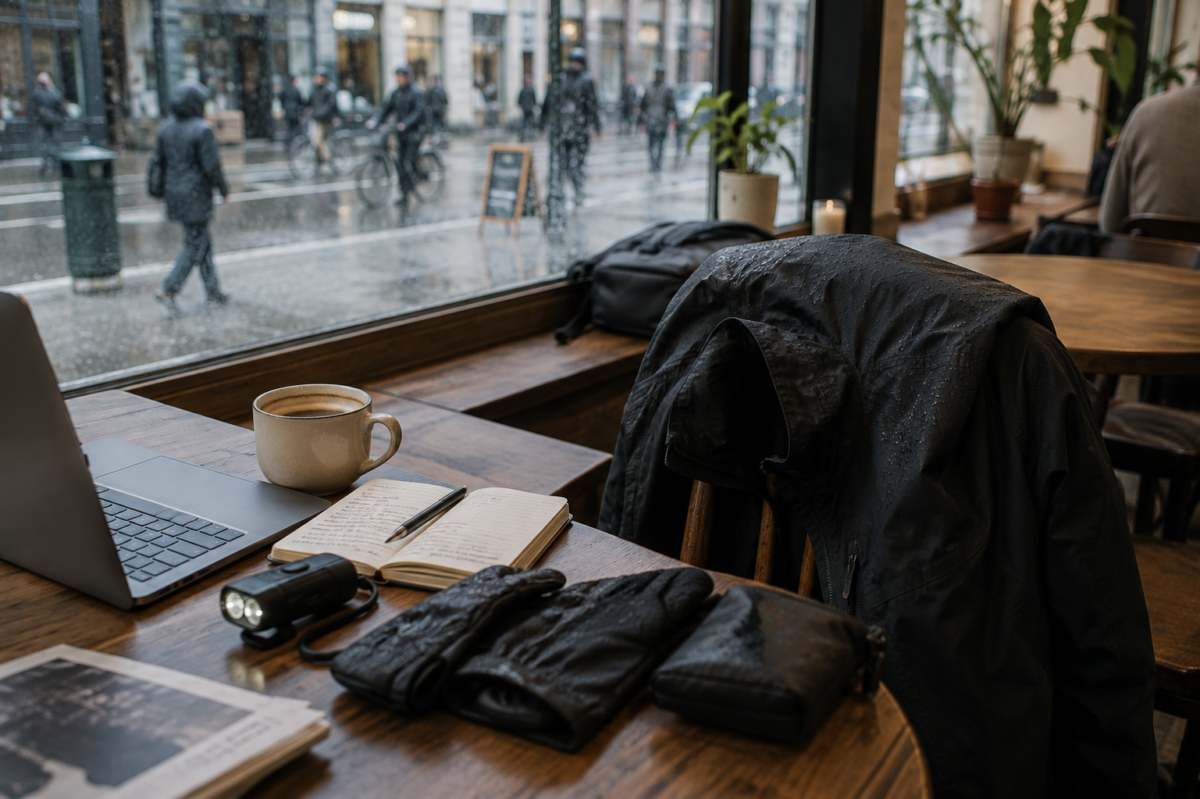 The technical shell gains cultural power when its extreme capability appears inside an entirely ordinary day.
Arc’teryx Did Not Need Fashion to Invent Its Authority
Many brands respond to a trend by adopting its surface language.
Technical fabrics.
Seam tape.
Utility pockets.
Muted colours.
The result may look capable.
Looking capable and being trusted are not the same thing.
Arc’teryx entered fashion culture with authority already accumulated elsewhere.
Decades of climbing and mountain use gave the products a reason to look the way they did.
The design language was not added after the market became interested.
The market became interested in the language.
This distinction is crucial.
It protects the brand from feeling like a fashion company wearing outdoor clothing as costume.
When a city consumer buys a shell, they are not merely buying waterproof fabric.
They are borrowing credibility from environments where performance genuinely matters.
Fashion can imitate a silhouette quickly.
It cannot reproduce decades of accumulated trust with the same speed.
Popularity Created a New Problem
Technical credibility can attract fashion consumers.
Too many fashion consumers can make the original audience suspicious.
This tension follows nearly every specialist brand that becomes culturally dominant.
The climber sees a technical tool.
The urban consumer sees a perfect daily jacket.
The fashion customer sees a recognised symbol.
The reseller sees demand.
All four may compete for the same product.
As Arc’teryx grew, limited releases, collaborations and highly desired colours generated queues, scarcity and resale activity more commonly associated with sneakers or luxury drops.
The brand’s success risked changing the meaning of ownership.
Was the jacket selected for performance?
For appearance?
For belonging?
For resale?
The answer can be all of them.
Consumer motives rarely remain pure once a product becomes culturally legible.
The danger is not that city consumers are using the product incorrectly.
A waterproof jacket can work perfectly well on a commute.
The danger is that symbolic demand begins to eclipse the qualities that created the symbol.
If Arc’teryx becomes merely a logo communicating taste, it loses the distinction that made the logo valuable.
The Price Makes Practicality Feel Like Luxury
Arc’teryx jackets are expensive.
The price cannot be explained solely by saying they are practical.
There are less expensive waterproof jackets.
Some perform very well.
Many urban consumers do not require the full capabilities of a premium alpine shell.
This does not make the purchase irrational.
It makes the purchase layered.
The buyer may value construction.
Fit.
Weight.
Warranty support.
Repairability.
Brand trust.
Design restraint.
Recognition.
The pleasure of owning the version perceived as definitive.
Modern premium consumption often operates this way.
The functional difference is real.
The emotional difference is larger.
Arc’teryx sells protection from rain.
It also sells protection from second-guessing the purchase.
The consumer believes they have chosen the serious version.
That certainty is part of what the higher price buys.
A Jacket Designed to Last Must Be Allowed to Age
Technical clothing introduces a contradiction.
It is marketed through durability.
It is also sold by a company that needs consumers to continue purchasing products.
Arc’teryx addresses part of this tension through repair, care, trade-in, resale and upcycling programmes under ReBIRD.
This matters culturally as much as environmentally.
A repaired shell communicates a different kind of value from a pristine one.
The visible patch becomes evidence that the product has done something.
Scuffs stop looking like damage to status.
They become proof of use.
This is unusual in fashion, where wear often reduces desirability.
Technical products can become more credible as they age—provided they continue functioning.
The strongest version of Arc’teryx culture may therefore be less about acquiring the latest shell and more about keeping one in play long enough for it to become personal.
A fashion object asks to remain perfect.
A capable object asks to remain useful.
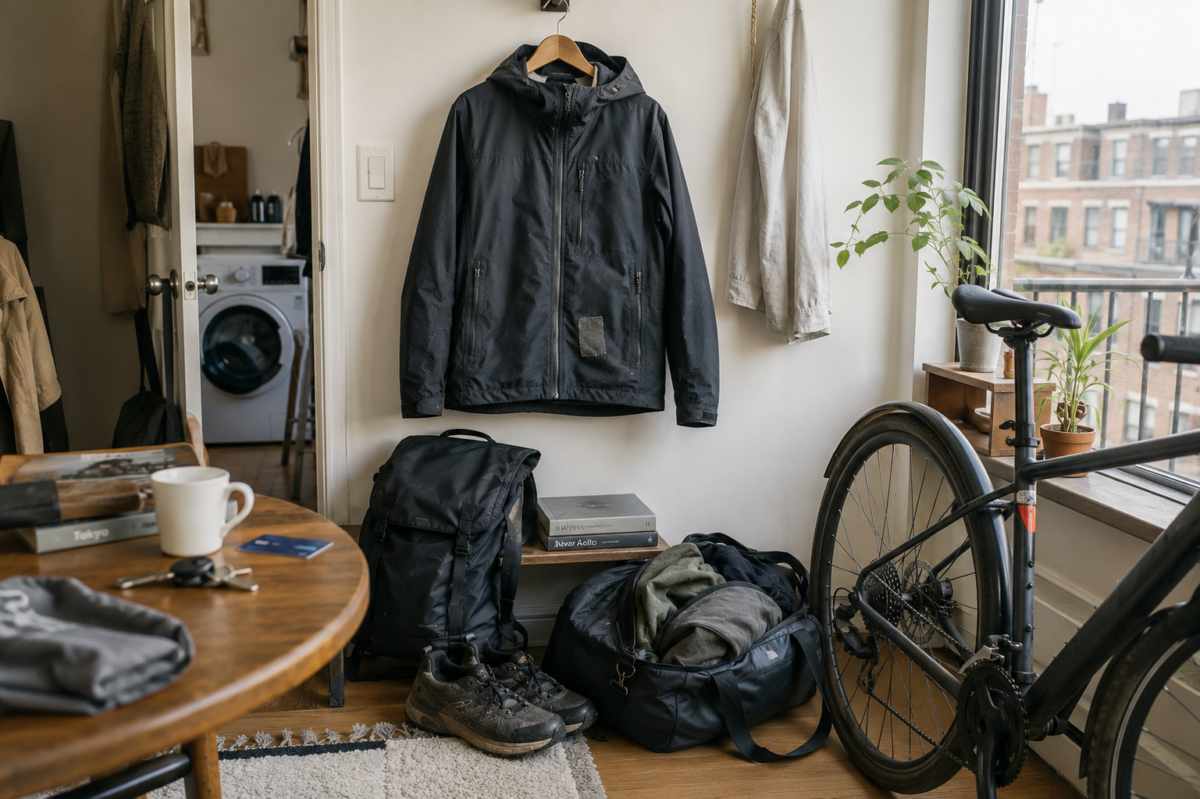 The real test of technical clothing begins after the hype fades, when the product must remain useful without fashion doing the work.
The Brand Is Growing Because the Meaning Travels
Arc’teryx is no longer a niche success contained within one outdoor community.
Its parent company reported more than thirty percent growth for the brand in 2025, with strength across regions, categories and channels.
New stores continued opening.
Women’s products and footwear became major growth areas.
The significance is not simply that more jackets were sold.
The brand’s meaning proved portable.
Vancouver credibility could travel to Beijing.
Climbing authority could travel to London.
A mountain product could become legible to luxury consumers without fully abandoning the mountain.
That is difficult to achieve.
Global expansion often flattens a brand until it becomes broadly acceptable and culturally vague.
Arc’teryx expanded by allowing different consumers to interpret the same core promise differently.
For one person, capability means alpine security.
For another, it means arriving dry at the office.
For another, it means owning the most respected version of a familiar object.
The situations differ.
The underlying desire remains consistent.
I want to be ready.
Maybe the Mountain Was Never the Point
Arc’teryx still needs the mountain.
Without it, the authority becomes costume.
But the majority of urban fascination may not be about wanting to climb.
It may be about wanting the qualities climbing equipment represents.
Competence.
Discipline.
Resilience.
Mobility.
The ability to continue when conditions change.
These qualities feel especially desirable in a period defined by instability.
Weather is less predictable.
Careers are less linear.
Travel is more frequent and more fragile.
Technology keeps changing the shape of ordinary life.
Consumers cannot control all of that.
They can buy a jacket that makes one small part of the uncertainty feel manageable.
This is why Arc’teryx moved beyond the logic of outdoor fashion.
It offered a wearable expression of control.
Not control over the environment.
Control over how prepared you feel inside it.
BRANDDIP TAKE
Arc’teryx did not make millions of city consumers want to climb mountains. It made the qualities associated with mountaineering—preparedness, resilience and capability—feel desirable in everyday life. The black shell became a modern status object because it communicates something more useful than wealth: that whatever happens next, the wearer has already thought about it.
DISCOVER ARC’TERYX
Explore Arc’teryx technical outerwear, footwear and equipment through the brand’s official website.
WORDS · BRANDDIP
CATEGORY · TASTE OF BRAND
VANCOUVER, CANADA / GLOBAL